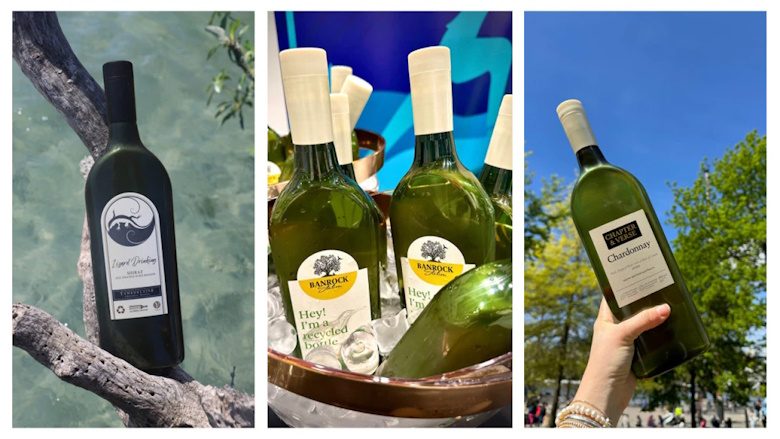
The Australian Government has awarded Packamama AU$1 million (~£500,000) under the Business Research and Innovation Initiative (BRII) Proof-of-Concept Round to develop next-generation, circular polymer wine bottles that protect wine quality, cut carbon emissions, and strengthen the competitiveness of Australian wine at home and abroad.
This follows the AU$100,000 (~£50,000) feasibility grant previously awarded under BRII, which funded Packamama’s initial study demonstrating technical viability and emissions savings.
The project, which received Grant Funding from the Australian Government, builds on Packamama’s success in that feasibility stage, where simulations and laboratory studies indicated wine preservation potential of around four years using advancements in its proprietary material stack. Independent life cycle analyses confirmed that Packamama’s bottles cut emissions by more than half compared to traditional glass bottles, while being lighter, shatterproof, and fully recyclable through existing systems.
As just one of two Proof-of-Concept recipients selected from six Feasibility-stage participants under the Alternative Packaging for Australian Wine challenge, Packamama sees this as a clear vote of confidence in its mission to excite consumers and decarbonize wine through design and technology. Over the next 18 months, the company will validate its bottle innovations through material trials, recyclability testing, and consumer research. Retail collaborations are being explored in both Australia and the UK, where prior listings with Coles in Australia and Tesco and Aldi in the UK have demonstrated strong shopper engagement and repeat purchase rates.
According to the Australian Wine Research Institute’s (AWRI) 2022 life cycle assessment (LCA), 74 percent of the wine industry’s total emissions stem from the making, moving, and recycling of glass bottles. A 2025 LCA by the AWRI’s Affinity Labs found that Packamama bottles can cut emissions by up to 56 percent and that exporting wine in Packamama bottles produces 32 percent less CO₂ than bulk export, proving a major opportunity to decarbonize Australia’s 1.5 billion-bottle-a-year sector while protecting jobs in Australia.
The work directly supports Wine Australia’s Emissions Reduction Roadmap, targeting a 42 percent cut in greenhouse gas emissions by 2030 and net zero by 2050, while aligning with Prime Minister Anthony Albanese’s pledge at the recent UN Climate Summit in New York for Australia to reduce emissions by up to 70 percent by 2035.
“Being selected by the Australian Government and Wine Australia to help lead the industry’s packaging transition is deeply motivating,” said Santiago Navarro, CEO & Founder of Packamama. “It is proof that innovation in materials, design, and technology can protect wine and the planet in equal measure. Together, we can make the wine bottle part of the climate solution, not the problem.”
Packamama welcomes engagement from producers, retailers, and supply-chain partners to collaborate as it advances this next phase of sustainable, circular wine packaging innovation.