In beverage packaging, the pressure to do more with less has never been greater. Whether working with aluminum, steel, glass, or PET, manufacturers are tasked with reducing environmental impact, improving operational efficiency, and maintaining uncompromising quality. Central to tackling this challenge is the concept of a ‘targeted reduction in resources’ — a strategy that goes beyond cost savings to embrace sustainability, precision, and performance.
Rather than broadly cutting inputs, targeted reduction focuses on smart, selective interventions: optimizing material usage, tightening process control, and deploying technology to ensure that every gram of material and every minute of production time delivers maximum value. This approach enables beverage manufacturers to achieve efficiency without compromising safety, quality, or consumer trust.
Engineering Precision in Metal Packaging
Few categories illustrate the balancing act of resource reduction more clearly than metal cans. The ongoing drive to reduce the material used for can walls and easy-open ends (EOEs) exemplifies the principle: save metal, but never at the expense of safety, integrity, or usability.
Thinner walls demand flawless process control. In can bodies, wall thickness must remain robust enough to preserve axial load capacity while resisting leaks and deformation. In lids, the score line must be cut with surgical precision — deep enough for effortless opening, but not so deep that the end fails during pasteurization or bursts in warm conditions. Achieving this consistently requires not only advanced tooling, but also inline inspection systems capable of detecting deviations long before they become costly defects.
This precision-first mindset ensures that material savings do not erode consumer trust and reflects a broader reality: resource reduction in beverage packaging is about doing things ‘smarter’.
Process Innovation and Automation
Another important focus for the targeted resource reduction approach lies in the production line itself. High-speed beverage can and bottle lines run at hundreds of units per minute. At these rates, even small inefficiencies translate into substantial waste. Traditional approaches (manual measurement, periodic checks, reactive adjustments) are no longer sufficient.
Instead, manufacturers are turning to inline monitoring, automated statistical process control (SPC), and predictive trend analysis. By continuously measuring parameters such as coolant quality in body makers, manufacturers can intervene before blockages or tool wear cause downtime. Rather than testing coolant once daily, inline systems monitor 24/7, automatically linking process data to finished product quality. This approach prevents scrap, extends tool life, and reduces unplanned maintenance.
Automation also helps tackle another critical resource: labor. Automated measurement systems remove the need for operators to pull samples manually, record values, and return products to the line. In high-throughput environments, these systems free up personnel while increasing both the frequency and accuracy of quality checks. The result is a leaner operation that extracts more efficiency from both materials and manpower.
Material Efficiency Meets Recyclability
While technical refinements are vital, the sustainability agenda ensures that material reduction strategies must align with recyclability. Beverage packaging professionals face mounting consumer and regulatory pressure to reduce carbon footprints without creating downstream recycling challenges.
Lightweight PET bottles exemplify this trend. Brand owners are redesigning bottles to use less resin while maintaining shelf appeal. Meanwhile, advances in closure design are reducing cap weight while ensuring tethering requirements are met. In aluminum packaging, thinner gauges are now paired with coatings and alloys engineered for performance, ensuring that cans remain fully recyclable without compromising function.
Crucially, these changes are not isolated material swaps; they are supported by deeper system-level process controls. Without rigorous testing of barrier performance, shelf life, and structural integrity, the gains from material reduction could be negated by failures in distribution or consumer use. The beverage industry is therefore converging on a consensus: recyclability and material efficiency are not competing priorities, but part of the same strategy.
Toward Predictive and Data-driven Packaging
The long-term vision for targeted resource reduction lies in data integration and predictive intelligence. Instead of reacting to defects or yield losses, beverage manufacturers are increasingly seeking to predict and prevent them.
Advanced instrumentation now enables manufacturers to establish process interdependencies, mapping how fluctuations in temperature, pressure, or composition cascade through a line. By defining thresholds and building predictive models, manufacturers can make proactive adjustments, preventing drift before it causes waste.

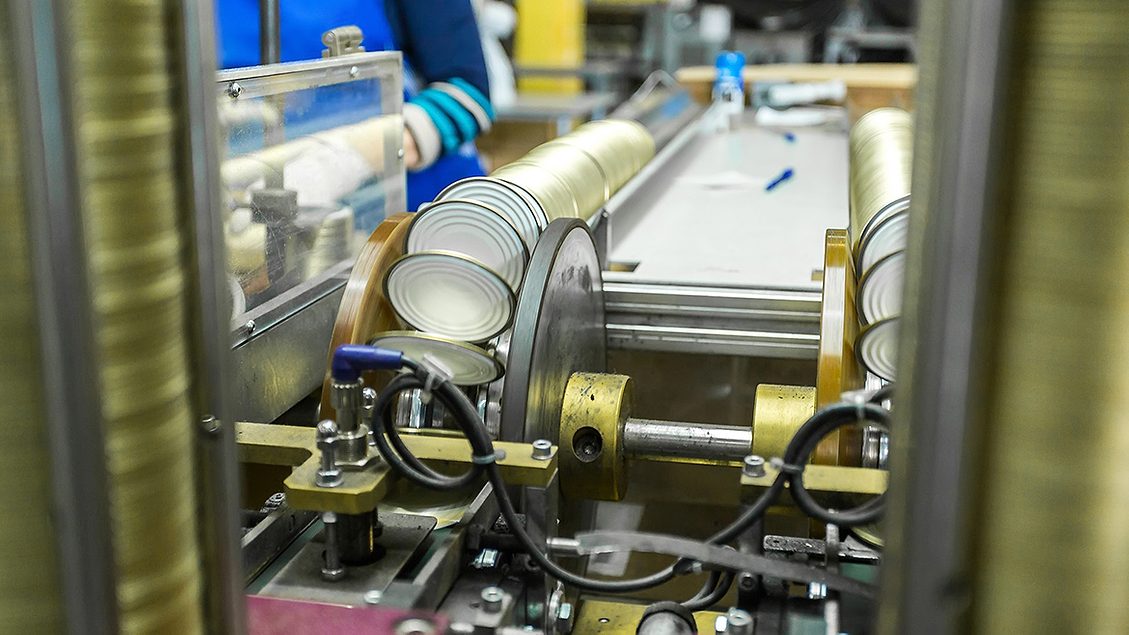
Image courtesy of Industrial Physics
This predictive shift is particularly powerful in the context of beverage packaging, where global supply chain volatility makes waste untenable. Every wasted lid, every jammed filler, and every recall represents lost resources that extend far beyond materials alone. Predictive intelligence turns resource reduction from a tactical intervention into a strategic safeguard against wider market pressures.
A Smarter Path Forward
For beverage packaging professionals in 2025 and beyond, achieving a targeted reduction in resources is not a one-time project, but a continuous pursuit of efficiency without compromise. It spans every aspect of production: from the microns of metal in an EOE score line, to the real-time chemistry of a coolant circuit, to the data-driven insights that predict tomorrow’s performance.
The common thread is control. Control of processes, control of quality, and control of the interdependencies that define modern packaging lines. By embracing smarter, more targeted approaches, the industry can not only reduce material and labor costs but also strengthen sustainability credentials and build resilience against economic and environmental pressures. Ultimately, it is about ensuring that every resource — whether that’s material, energy or labor— is used with maximum precision and purpose.
To learn more about systems to achieve this control or to understand how Industrial Physics can support your operations, visit industrialphysics.com.