High-quality packaging solutions for meat and sausage products play a key role in extending shelf life, preserving freshness, and enhancing food safety. However, once the EU Packaging and Packaging Waste Regulation (PPRW) enters into force, packaging materials will also need to become significantly more sustainable.
“The most effective steps to achieve this are twofold: first, reducing resource consumption and the carbon footprint through smarter packaging design, greater material efficiency, and effective recycling of the plastic fractions already in circulation,” SÜDPACK says. “Second, stepping up the use of recycled material, recyclable mono-materials, and bio-based alternatives. SÜDPACK’s product and service portfolio demonstrates that, even in challenging times, the shift to more environmentally friendly concepts is achievable and—above all—a real economic opportunity.”
SÜDPACK adds: “As a family-owned company and a leading film manufacturer, SÜDPACK has been raising the bar for decades with its innovative high-performance films and packaging concepts. Headquartered in Ochsenhausen in Upper Swabia, SÜDPACK set a clear course toward sustainability early on and has positioned itself as a driver of the circular economy in the packaging industry. As a result, its film portfolio is fully aligned with today’s requirements.”
One-stop shop for holistic film concepts
SÜDPACK’s says its extrusion expertise—combined with state-of-the-art technology, deep project experience, and a consistent focus on the customer—underpins its success.
Today, SÜDPACK offers a broad range of conventional reusable laminates as well as material-efficient, recyclable material structures, covering a wide range of packaging designs and product and machine requirements. The portfolio includes perfectly matched top and bottom webs—from rigid and flexible films for MAP and vacuum packaging to film solutions for the production of a wide variety of pouch systems.
“All product developments meet demanding retail, sustainability, and consumer requirements. They deliver maximum product protection, extended shelf life, and a high level of process reliability,” SÜDPACK says.
Longer shelf life. Less food waste. Greater economic profitability.
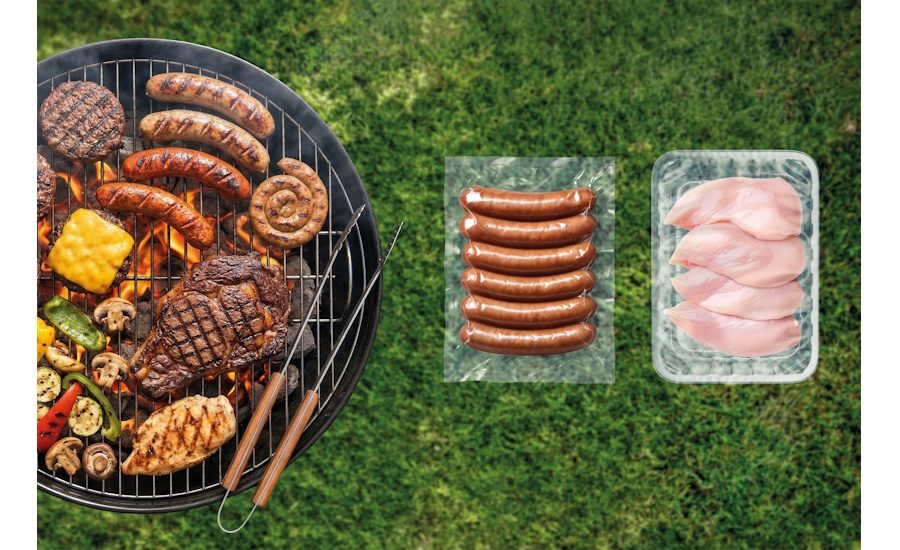
Key point: Plastic packaging—whether made from laminate structures or recyclable mono-materials—extends the shelf life of fresh ground meat, steaks, roasts, chops, spreadable and cooked sausage, ham, cold cuts, and frankfurters. It also protects the product until it’s eaten, helping preserve its aroma and freshness, and preventing spoilage. This makes it an important lever for reducing food waste.
“The excellent processability of this packaging material enables manufacturers and packagers to boost efficiency and throughput, reduce scrap and downtime, and—an often overlooked benefit—achieve consistent, reproducible results,” SÜDPACK says. “Even very thin, recyclable PP- or PE-based material structures typically run smoothly on standard packaging machines. SÜDPACK adds an extra advantage with perfectly matched top and bottom webs designed to ensure maximum process and packaging reliability.”
Customized packaging solutions for meat and sausage products
For cold cuts, SÜDPACK developed a packaging concept for MAP applications consisting of a PP-based—and therefore recyclable—top web and bottom web from the Pure-Line product family. The bottom web offers excellent thermoformability and high stability, while the peelable high-barrier top web delivers long shelf life and clean opening behavior.
The thermoformable Multifol® line keeps ground meat, roasts, frankfurters, and chops reliably protected thanks to its high puncture resistance. Both the conventional and recyclable laminate structures in this product family are among the best-sellers in the SÜDPACK portfolio. In addition to their excellent sealing properties, they also offer high transparency for an appealing presentation at the POS.
With SafePeel Clear NT, SÜDPACK now offers a next-generation, highly transparent lidding film that seals exceptionally well to mono-PP trays—and, at 37 µm, is more than 25% thinner than its predecessor. Thanks to reliable sealing even when the seam is contaminated, delicate, perishable foods such as chicken, steaks, and self-service products stay well protected. At the same time, an innovative peel solution makes the package easy and convenient for consumers to open.
By contrast, the PP- and PE-based mono-materials in the CarbonLite® series can be used, for example, as a lightweight PP flow pack for ground meat or as a stable, self-standing PE doypack for salami sticks. Key features include a high barrier for optimal product safety, process reliability at high cycle rates, recyclability, and low use of materials.