Sustainability has become one of the defining priorities for the global packaging industry. Companies across manufacturing, consumer goods and logistics are investing heavily in environmental initiatives, publishing ESG reports and setting ambitious carbon and waste reduction targets.
The urgency is clear. According to research cited by the United Nations Environment Programme, about 36% of all plastics produced globally are used for packaging, making it the largest application for plastics worldwide.
At the same time, packaging represents roughly 40% of global plastic waste, highlighting the sector’s enormous environmental footprint and the growing pressure on manufacturers to demonstrate measurable progress.
Against this backdrop, companies are racing to prove sustainability performance.
But one critical question remains:
Are we measuring the right things?
Too often, sustainability is evaluated using metrics that are easy to communicate rather than those that reflect the real environmental impact of manufacturing operations. Metrics that look compelling in marketing materials or ESG disclosures may tell only part of the story when examined through the lens of engineering performance, emissions control, and long-term operational sustainability.
For the packaging industry to achieve meaningful environmental progress, leaders must move beyond surface-level indicators and start measuring what truly matters.
The Problem with “Report-Friendly” Sustainability Metrics
Many sustainability metrics used today were developed primarily for disclosure frameworks rather than operational decision-making.
Recyclability claims, material reduction targets and recycled content percentages have become standard talking points across the industry. While these initiatives are important, they often focus on end-of-life outcomes rather than the environmental performance of the manufacturing process itself.
Meanwhile, the production of plastics continues to generate significant environmental impact. The global plastics lifecycle is responsible for roughly 3.4% of total greenhouse gas emissions, according to the Organisation for Economic Co-operation and Development.
This gap between reporting metrics and operational reality can create a misleading perception of progress—one where sustainability disclosures improve even while underlying environmental performance changes little.
For packaging manufacturers, real environmental impact often occurs on the production floor: in drying ovens, solvent-based printing lines, coating processes and curing systems that generate volatile organic compounds (VOCs) and other industrial emissions.
Why Pollution Abatement Is Becoming a Strategic Advantage
Flexible packaging, converting, printing and coating operations frequently rely on solvent-based processes that produce VOC emissions.
If not properly managed, these emissions contribute to smog formation, workplace exposure risks and regulatory non-compliance.
Advanced pollution abatement technologies are increasingly becoming part of the sustainability solution—not just a compliance requirement.
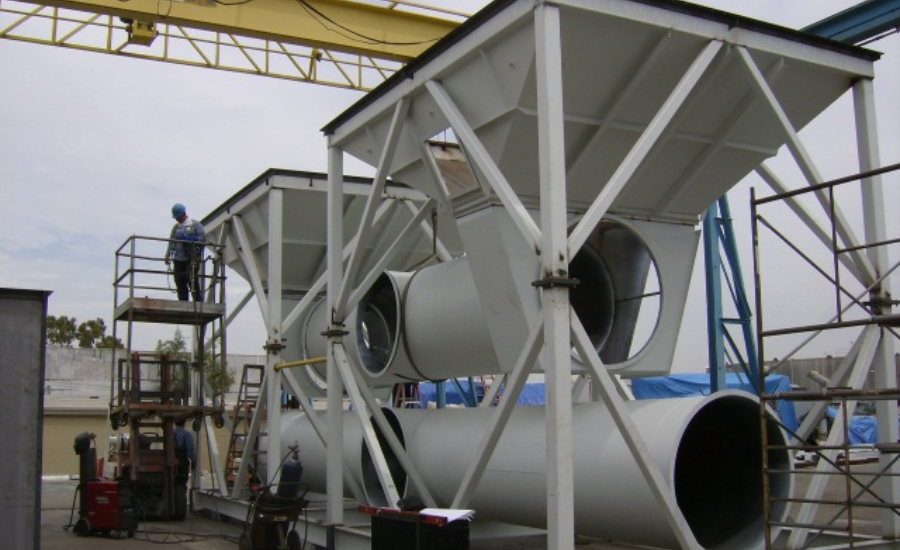
For example, regenerative thermal oxidizers (RTOs), widely used in packaging and flexographic printing operations, can achieve VOC destruction efficiencies exceeding 99% while recovering up to 97% of thermal energy for reuse in the process.
When integrated properly into plant operations, these systems can deliver multiple sustainability benefits:
- Significant reductions in air pollutants
- Lower energy consumption through heat recovery
- Improved process efficiency
- Reliable data for environmental reporting
Companies specializing in industrial emissions control—such as Ship & Shore Environmental—often work with packaging manufacturers to evaluate emissions sources, design capture systems, and implement integrated air pollution control technologies that support both regulatory compliance and sustainability reporting.
Engineering Reality vs. Marketing Metrics
From an environmental engineering perspective, meaningful sustainability measurement requires evaluating entire systems, not just isolated metrics.
Key indicators that better reflect real environmental performance include:
- Operational emissions intensity per production unit
- Energy consumption per packaging output
- Thermal recovery efficiency
- Air pollution control system performance
- Lifecycle system efficiency
These engineering-driven metrics often reveal environmental improvements that are invisible in traditional ESG reporting frameworks.
For example, a packaging facility that installs a high-efficiency emissions control system may significantly reduce VOC emissions while also lowering natural gas usage through heat recovery. Yet these operational improvements rarely appear in headline sustainability metrics focused solely on recyclability or material use.
For plant managers and operations teams, however, these are the metrics that determine real environmental performance.
When Sustainability Metrics Meet Regulation
Regulators around the world are increasingly shifting toward performance-based environmental compliance.
Agencies such as the United States Environmental Protection Agency are placing greater emphasis on measurable emissions reductions and continuous monitoring, rather than relying solely on design specifications or estimated performance.
This trend is particularly relevant for packaging manufacturers operating in sectors such as:
- Flexible packaging
- Food and beverage packaging
- Label and printing operations
- Coatings and laminations
In these environments, sustainability metrics must be supported by verifiable operational data.
Investments in emissions monitoring systems, pollution abatement technology, and plant efficiency improvements not only help companies meet regulatory requirements but also generate the measurable data increasingly expected by customers, investors and policymakers.
Aligning Sustainability with Accountability
The global packaging market continues to expand rapidly, driven by ecommerce growth, changing consumer behavior and increasing demand for packaged food and medical products.
As sustainability expectations rise alongside this growth, packaging manufacturers face a critical challenge: how to demonstrate real environmental progress—not just report it.
Forward-thinking companies are beginning to embed sustainability directly into plant infrastructure through:
-
energy-efficient process design
- emissions control integration
- real-time environmental monitoring
- lifecycle-based operational metrics
This approach aligns sustainability with measurable accountability.
When environmental performance is grounded in engineering data and operational measurement, sustainability becomes more than a reporting exercise—it becomes a driver of efficiency, regulatory resilience and long-term competitiveness.
Because in the end, real sustainability in packaging does not start with what is easiest to report.
It starts with what is most important to measure.