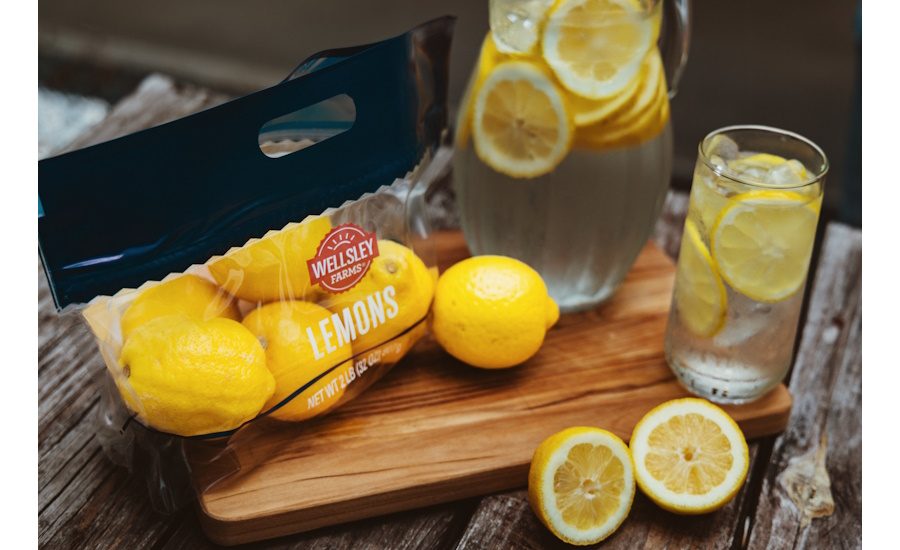
The conversation around non-laminated polyethylene packaging has shifted. A few years ago, grower-shippers were asking whether PE non-laminated was ready. Today, most of them are asking when to make the move and what it will cost them to wait.
Extended Producer Responsibility legislation is the primary driver of that urgency. EPR frameworks are creating real financial and compliance pressure across the supply chain, and PE non-laminated’s compatibility with existing film recycling infrastructure has put it at the center of most sustainability conversations we have with customers. But EPR alone does not explain the momentum. PE non-laminated has also genuinely gotten better. The film technology has advanced to the point where the material tradeoffs that used to make this a hard sell are no longer the barrier they once were.
That said, this is not a simple switch, and growers and packers who treat it like one tend to run into problems. Here is what the transition actually looks like from where we sit.
EPR Is the Trigger. Recyclability Is Still the Foundation.
EPR requirements are pushing customers toward PE non-laminated because non-laminated structures have a cleaner path to store drop-off recycling eligibility. Laminated PE structures can also qualify, but only under specific conditions, which makes that path more complicated to navigate. Non-laminated PE removes most of those variables.
That does not mean the recyclability claim is airtight. PE non-laminated is technically recyclable, but recovery rates depend on consumer participation, retailer program execution, and the quality of the material collected. So when customers want to make a public-facing claim around packaging, we tell them to be specific. The honest version is not “this bag is recycled.” It is “this bag is compatible with the only film recycling system that currently exists at scale.” That distinction matters, especially as regulators scrutinize vague recyclability language more aggressively.
The value of moving to PE non-laminated today is less about guaranteeing an end-of-life outcome and more about staying aligned with the infrastructure that does exist, and positioning for the infrastructure that is being built.
The Barrier Performance Gap Has Narrowed Significantly
One of the most persistent objections we hear is that PE non-laminated cannot match laminate performance, particularly for produce that needs specific atmospheric conditions to maintain shelf life. That objection is becoming less valid by the year.
PE is no longer a low-barrier film. It has become a tunable system. Machine-direction orientation, known as MDO-PE, improves stiffness and clarity while retaining the recyclability of the base resin. Precision barrier coatings applied within the non-laminated structure allow for oxygen and moisture transmission control that would have been difficult to achieve in PE even five years ago. Microperforation technology has also advanced, giving packers more control over the modified atmosphere inside the bag without introducing incompatible material layers. Taken together, these developments mean that PE non-laminated can now be engineered to meet the functional requirements of a much wider range of produce categories than was previously possible.
Which Categories Move First
Not every product is an equal candidate for PE non-laminated, and the adoption pattern across produce categories reflects that.
Lower-risk products tend to transition first. Carrots, potatoes, and onions are more durable, relatively tolerant of moisture variation, and already packed in breathable formats. PE non-laminated is a natural fit, and we have seen those categories move with relatively little friction.
The categories that lag are the ones where the stakes are highest. Berries and fresh herbs have high respiration rates, short shelf lives, and premium price points. A packaging failure in those categories is not a quality inconvenience; it is a write-off and a customer relationship problem. Until PE non-laminated solutions are fully proven across the specific shelf-life and cold chain conditions those products require, many packers in those segments will hold their position. That is not irrational caution. It is the right call until the technology and the validation data catch up.
Print Quality and Shelf Presence
Laminates have historically given brands sharper print, deeper colors, and more surface gloss. PE non-laminated has a different look: matte, natural, and clean. Whether that is a tradeoff or an upgrade depends on how a brand wants to position itself.
Increasingly, the brands we work with see the PE non-laminated aesthetic as an asset. The natural look reads as less processed, and that aligns with where fresh produce branding is going. There are also practical shelf considerations: More retailers are setting sustainability standards for the packaging they source, and the visual language of PE non-laminated communicates something about those commitments before a customer reads a word on the bag.
What the Transition Actually Requires
The shift from laminated to PE non-laminated packaging is not a line change. It touches operations, quality protocols, and customer expectations simultaneously.
Most customers work through it in stages. That means running trials, validating shelf life under realistic cold chain conditions, adjusting seal parameters for PE versus laminate behavior, and communicating proactively with retail buyers about the transition timeline. The packers who move through it most smoothly are the ones who treat it as a managed process rather than a one-time swap.
Our role in that process is to help customers build a case that is technically defensible and commercially viable. The regulatory environment is pushing the industry toward non-laminated structures. The film technology has advanced to support the transition. The work now is in executing it carefully enough that the performance holds up and the sustainability claims do, too.