California’s SB 54 EPR regulations have officially taken effect, with full producer registration having been due June 1. Thousands of brands still haven’t registered, despite the risk of per-SKU daily fines and potential restrictions on selling into the state. Meanwhile, several other states have implemented packaging EPR programs of their own.
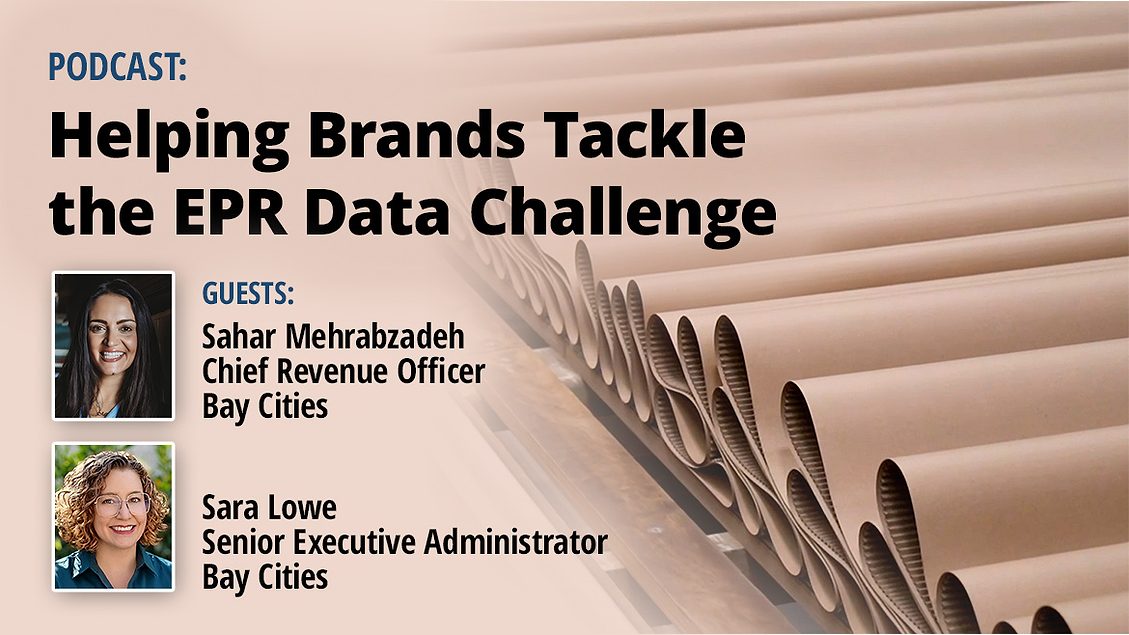
To discuss strategies for complying with SB 54 and other EPR programs, we recently sat down with Sahar Mehrabzadeh, Chief Revenue Officer at Bay Cities Packaging, and Sara Lowe, Senior Executive Administrator and EPR Compliance Expert at Bay Cities.
We asked about the proactive steps that Bay Cities is taking to help retailers and brands achieve SB 54 compliance.
“Our role is to help brands make smarter packaging decisions before compliance becomes a major problem or concern. Most of the outcomes that affect EPR compliance are determined very early in the process,” Mehrabzadeh said. “We’re helping brands simplify the packaging structure. We’re trying to eliminate the use of unnecessary material, increase the recycled content, and improve the actual recyclability.”
Lowe said that SB 54 is really a data problem.
“As a designer and manufacturer, we have the granular data that brands need to complete their reporting requirements, and we are providing that up front,” Lowe said.
Lowe added that Bay Cities is designing packaging “in a way that makes data a more manageable lift for the brands—minimizing components, making sure that components are fully separable—so you don’t get hit with the highest fees on the smallest components of the package.”
Even though Bay Cities is based in California, the company works with major retailers and brands nationwide. We asked Mehrabzadeh and Lowe if they view the various state-level EPR programs as having achieved some level of consistency as far as what they are requiring of packaging producers.
“The way the states are implementing them on the ground is different in every state, but I do think the Circular Action Alliance has done pretty good work at achieving what harmonization is available to the industry right now,” Lowe said.
To date, all U.S. states implementing EPR programs have selected Circular Action Alliance (CAA) as their Producer Responsibility Organization (PRO).
“As for the seven or so states that have legislation in progress, they’re looking at what other states are doing and trying to pick up the requirements that work best for their state rather than reinvent the wheel,” Lowe noted.