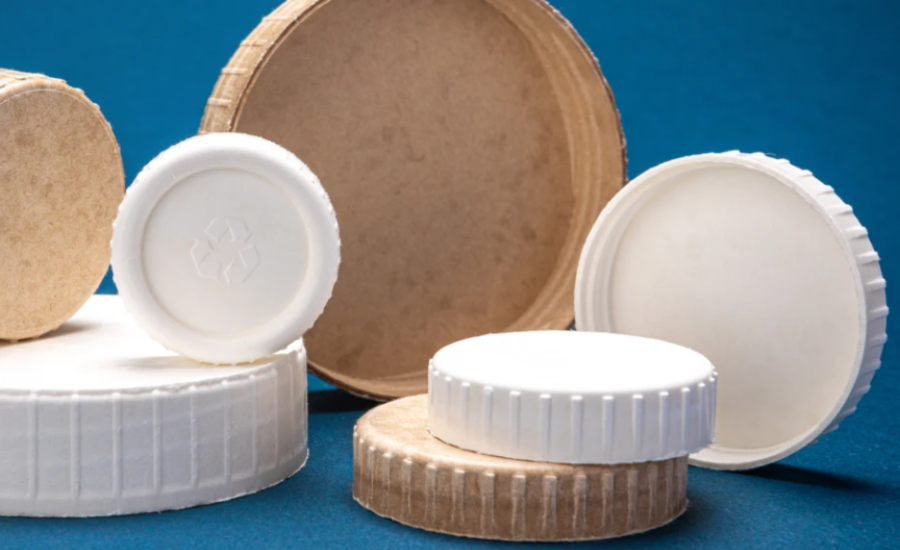
Blue Ocean Closures (BOC), the Swedish pioneer in fiber-based packaging innovation, has announced a major milestone: its latest generation of fiber screw caps can match or outperform fossil plastic in material cost, while delivering significantly lower energy consumption during production. This marks a crucial step toward making sustainable materials not only the preferred environmental choice, but also the most cost-efficient commercial option for global packaging producers.
The breakthrough results from continuous advancements in BOC’s proprietary forming technology, which enables the forming of renewable fibers directly from virgin or recycled carton board feedstock — a material and technology combination that is both widely available and less expensive than traditional fiber-forming and fossil-based plastics. Combined with production cycles below two seconds and an energy requirement roughly one-tenth that of conventional plastic molding, this development establishes fiber closures as a truly cost-leading, low-carbon alternative for a wide range of packaging applications.
“For the first time, we can say that fiber-based closures can be cost competitive — or even lower in cost — compared to fossil plastics, while using only a fraction of the energy,” says Lars Sandberg, CEO of Blue Ocean Closures. “This is the moment when sustainability and profitability truly align.”
Blue Ocean Closures’ new cost position follows several years of intensive R&D and industrial collaboration with early adopters and leading global brands in a pioneering community including Great Earth and The Absolut Group. The company’s technology enables high-speed production of recyclable fiber components that integrate seamlessly into existing paper recycling systems, meeting the accelerating demand for circular packaging solutions driven by global brand commitments and new EU regulations.
Beyond sustainability and cost efficiency, BOC’s fiber closures also open new creative opportunities for brands. Their natural look, tactile feel and customizable geometry provide high shelf impact and strong consumer preference, helping brands differentiate through both design and sustainability. This combination of technical performance, low-cost substrate and consumer appeal establishes a new value dimension for packaging innovation.
“We are proud to prove that sustainability no longer needs to come at a premium,” Sandberg continues. “This achievement demonstrates that fiber-based forming can lead on both cost and environmental performance — while also creating new ways for brands to engage consumers and strengthen their identity.”