TL;DR
- Rising demand and cost pressures make warehouse space optimisation essential.
- Use vertical racking, standardised bins, and ergonomic packing stations.
- Introduce packing automation to increase throughput in the same footprint.
- Align picking, packing, and dispatch for smoother flow.
- Review layouts regularly to adapt to changing demand.
Result: more orders processed, faster packing, safer workstations, and better use of space – all without expanding your warehouse.
UK warehouses are under pressure. Manufacturing output is rising, while costs for labour, energy, space and transport keep increasing.
For manufacturers, distributors and eCommerce businesses, this means one thing: make better use of the space you already have.
While expanding warehouse space might seem like the answer to boost capacity, it is expensive and disruptive. A smarter option is to optimise your warehouse layout and support it with the right packing equipment. Done well, this can unlock hidden capacity, improve packing speed and increase throughput without increasing your footprint.
In this blog, we’ll explore six practical steps to optimise your warehouse layout, from storage and picking through to packing and despatch.
Why warehouse layout matters in today’s economy
With manufacturing volumes rising and customer expectations for speed and accuracy stronger than ever, it’s no longer enough to simply have space, you must make space work harder.
Effective layout design reduces unnecessary travel, eliminates bottlenecks and supports an efficient flow of goods through the warehouse, from goods-in and picking through to packing and dispatch. The right products – racking, pick bins, packing stations and automation – can transform under-utilised areas into high-performance operational zones.
1. Increase storage density with vertical racking systems
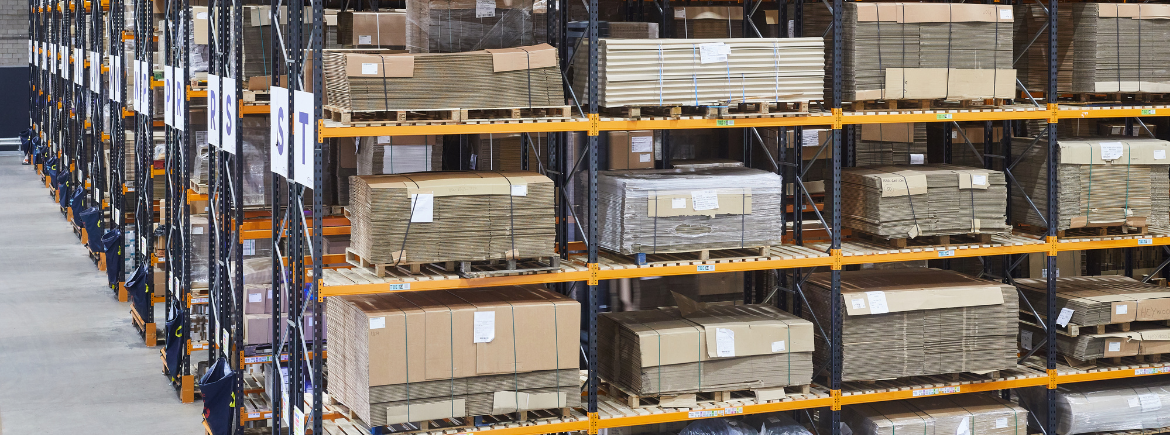
Maximising vertical storage is one of the most effective ways to unlock additional capacity without increasing your footprint.
Quality racking systems support:
- Higher pallet stacking and improved vertical space utilisation
- Better stock organisation and accessibility
- Separation of bulk storage from fast-moving pick faces
Adjustable pallet racking and shelving can be configured to match SKU profiles, pallet dimensions and throughput requirements, turning wasted vertical space into operational advantage.
2. Improve picking efficiency using bins, totes and containers
Pick faces are critical to how effectively space is used on shelving and racking. Larger, inconsistent pick locations lead to wasted floor space and slower picking.
Standardised pick bins and containers help:
- Compactly arrange SKUs in pick zones
- Improve organisation and reduce void space
- Enable faster, more accurate picking
Consistent container sizes also mean greater compatibility with conveyors, automation equipment and packing workstations, supporting efficient layout design throughout the warehouse.
3. Create high-efficiency packing workstations
Packing areas are often a bottleneck in warehouse operations, especially when layout, equipment and operator wellbeing aren’t aligned to demand.
Well-designed packing benches and workstations are not just about speed, they also play a critical role in protecting packer health and maintaining safe, organised work areas. In 2026, with labour availability and retention still challenging for many UK businesses, ergonomics and safety are key considerations when optimising packing layouts.
Effective packing stations can:
- Consolidate packing, sealing and labelling into a single, space-efficient footprint
- Reduce unnecessary movement and reaching between operations
- Improve throughput while supporting better posture and working practices
To counteract the impact of standing for long periods, anti-fatigue mats should be incorporated into packing areas. These help reduce strain on joints and muscles, supporting operator comfort and productivity over long shifts.
Organisation is equally important. Pack bench sacks and waste collection systems keep offcuts, used packaging and waste materials contained at the workstation, reducing trip hazards and preventing clutter from spreading into walkways or adjacent packing zones.
By integrating packaging consumables, cutting tools, dispensers, anti-fatigue mats and waste management accessories directly into the packing station, businesses can create safer, more efficient work areas – increasing packing capacity while freeing up surrounding floor space and improving overall warehouse flow.
4. Use packing automation to boost throughput and reduce footprint
As order volumes increase, many UK warehouses are turning to packing automation to scale output without expanding packing areas.
Modular and scalable systems such as:
allow operations to process higher volumes within the same layout. Automation also delivers consistency and speed, helping teams achieve higher throughput per square metre.
5. Optimise flow between picking, packing and despatch
Warehouse layout shouldn’t operate in silos, the way products flow from picking into packing and then to despatch is critical.
Aligning:
- Pick zones near packing stations
- Packing zones near staging and despatch
- High-demand SKUs in accessible locations
reduces travel time, improves productivity and makes more effective use of floor space.
Small layout shifts – supported by the right storage and packing products – can create meaningful gains in daily throughput.
6. Re-evaluate layout regularly as demand changes
With manufacturing stronger and order profiles shifting, layouts that worked in previous years may no longer be optimal in 2026.
Regular reviews help identify:
- Redundant storage areas
- Bottlenecks in picking or packing zones
- Opportunities to add or reconfigure systems
Products such as adjustable racking, modular picking stations and flexible automation enable layouts to evolve with changing demand, rather than requiring costly redesigns.
How Macfarlane Packaging helps maximise space and efficiency
At Macfarlane Packaging, we support warehouse optimisation by providing layout-focused solutions and the products that make them work.
Our range helps businesses improve space utilisation and operational performance with:
We take a holistic view, assessing your current layout, operational flow and packaging requirements to recommend solutions that unlock capacity, cut handling time and support sustainable growth.
In 2026, warehouse space optimisation is no longer a tactical exercise, it’s a strategic imperative. Rising UK manufacturing activity and tighter operational budgets mean businesses must get smarter about how they use their existing space.
With the right layout and supporting storage, picking and packing solutions organisations can achieve more throughput, higher productivity and better service, all without increasing their footprint.