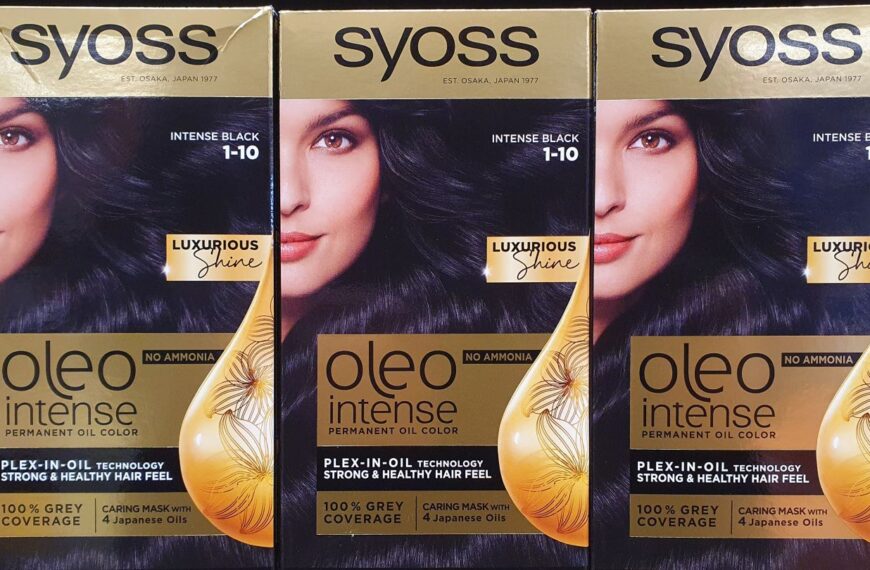
For decades, black has been one of the most powerful tools in packaging design.
It signals luxury. Authority. Simplicity. Confidence. From beauty and personal care to premium food and consumer goods, black has been the color designers return to when they want something to feel timeless and intentional.
And yet, black has also carried an uncomfortable truth.
Traditional carbon black pigments make plastic packaging invisible to near-infrared (NIR) sorting systems, which are widely used in recycling. The result? Black packaging that looks premium on shelf but disappears at end of life.
This contradiction has forced designers and brands into a false choice: iconic aesthetics or circularity.
That choice was never a design failure. It was a material limitation.
The Real Problem With Black
Carbon black has been used for decades because it delivers deep, consistent color and reliable performance. But its optical properties absorb NIR light, preventing sorting systems from recognizing black plastic as a recyclable material.
As sustainability targets tightened, black packaging became increasingly problematic. Designers were asked to avoid it, replace it, or redesign around it. Entire color palettes shifted, not because the creative intent changed, but because the material science hadn’t caught up.
The result was frustration on all sides.

A material solution, not a design compromise
UPM Circular Renewable Black changes this equation.
Developed by UPM Biochemicals at their biorefinery in Leuna, Germany, UPM Circular Renewable Black is a black pigment derived from lignin — the second most abundant natural polymer on earth, and a byproduct of wood processing that would otherwise be burned for energy. UPM sources its lignin exclusively from European beechwood harvested under FSC® certified sustainable forest management programs, using sawmilling residues and lower-grade wood that has no higher-value use. The supply chain is EU-sourced, German-made, and optimized to minimize transport emissions.
Unlike traditional carbon black, it is detectable in NIR sorting systems — allowing black plastic packaging to stay visible and sortable in recycling streams. This is not a marginal improvement. NIR spectroscopy data confirms that polypropylene (PP) colored with UPM Circular Renewable Black maintains a reflection profile close to uncolored PP across the 1400–2400 nm wavelength range, where standard, recycling sorting systems operate. Traditional carbon black collapses this signal almost entirely, which is why black plastic has historically been treated as unrecyclable by most facilities.
The thermal stability of the pigment has also been independently validated. Melt flow index and oxidation induction time testing confirm it performs consistently through recycling processes, meaning material recovered from black packaging can actually be reused — not just sorted.
For designers, the surface impact is immediate and familiar:
- The same deep, premium black
- The same surface quality
- The same processing behavior.
What changes is what happens after use.

The environmental case — with the data to back it
UPM Circular Renewable Black carries a cradle-to-gate carbon-negative footprint. This has been established through a full life cycle assessment (LCA) conducted in accordance with ISO standards. Critically, the study was independently reviewed and validated by a third-party certification body — ensuring the results meet the bar for sustainability.
The negative footprint is driven primarily by biogenic carbon uptake: the beechwood feedstock sequesters atmospheric CO₂ during growth, and that carbon remains stored in the pigment during its use phase. When the fossil impact of production is weighed against this biogenic uptake, the net cradle-to-gate result is below zero.
The recycling benefit compounds this further. A model study comparing five product life cycles of black plastic — with and without recycling — found that enabling end-of-life recovery reduces overall global warming potential by approximately 53%, based on an 85% recycling rate scenario. This figure reflects what becomes possible when black packaging can actually be sorted and processed.
Where this fits — Europe today, North America tomorrow
UPM Circular Renewable Black is particularly well-suited to the European packaging market, where regulatory pressure has moved furthest and fastest.
The North American market is at an earlier but accelerating point in this trajectory. Material Recovery Facilities (MRFs) across the US have historically used older optical sorting infrastructure, which is one reason black plastic recyclability hasn’t been a priority.
That is changing.
As MRF operators invest in updated NIR-equipped sorting lines — driven by improved economics, state-level legislation, and pressure from brand sustainability commitments — the infrastructure to actually process NIR-detectable black packaging is growing. Brands that adopt UPM Circular Renewable Black now are positioning themselves ahead of that shift, rather than scrambling to reformulate when sorting capacity catches up with ambition.
In both markets, the underlying dynamic is the same: the packaging industry is moving toward systems where material identity at end of life determines what’s recoverable.

Returning choice to designers
The significance of this innovation goes beyond technical specifications.
For the first time, designers are no longer asked to redesign around sustainability constraints when it comes to black. They don’t have to sacrifice contrast, depth, or brand equity. They don’t have to justify why black was avoided.
They can choose black again. And do so responsibly.
This shift reflects a broader evolution in sustainable design. The most effective solutions don’t demand aesthetic compromise. They remove the underlying conflict.
The future of black
Black was never the enemy of sustainability. Fossil-based, undetectable pigments were.
As packaging moves toward circular systems, materials that preserve creative intent while enabling real end-of-life outcomes will define the next generation of design.
Black is back. And this time, it belongs in the loop.
Order a sample and experience UPM Circular Renewable Black firsthand.