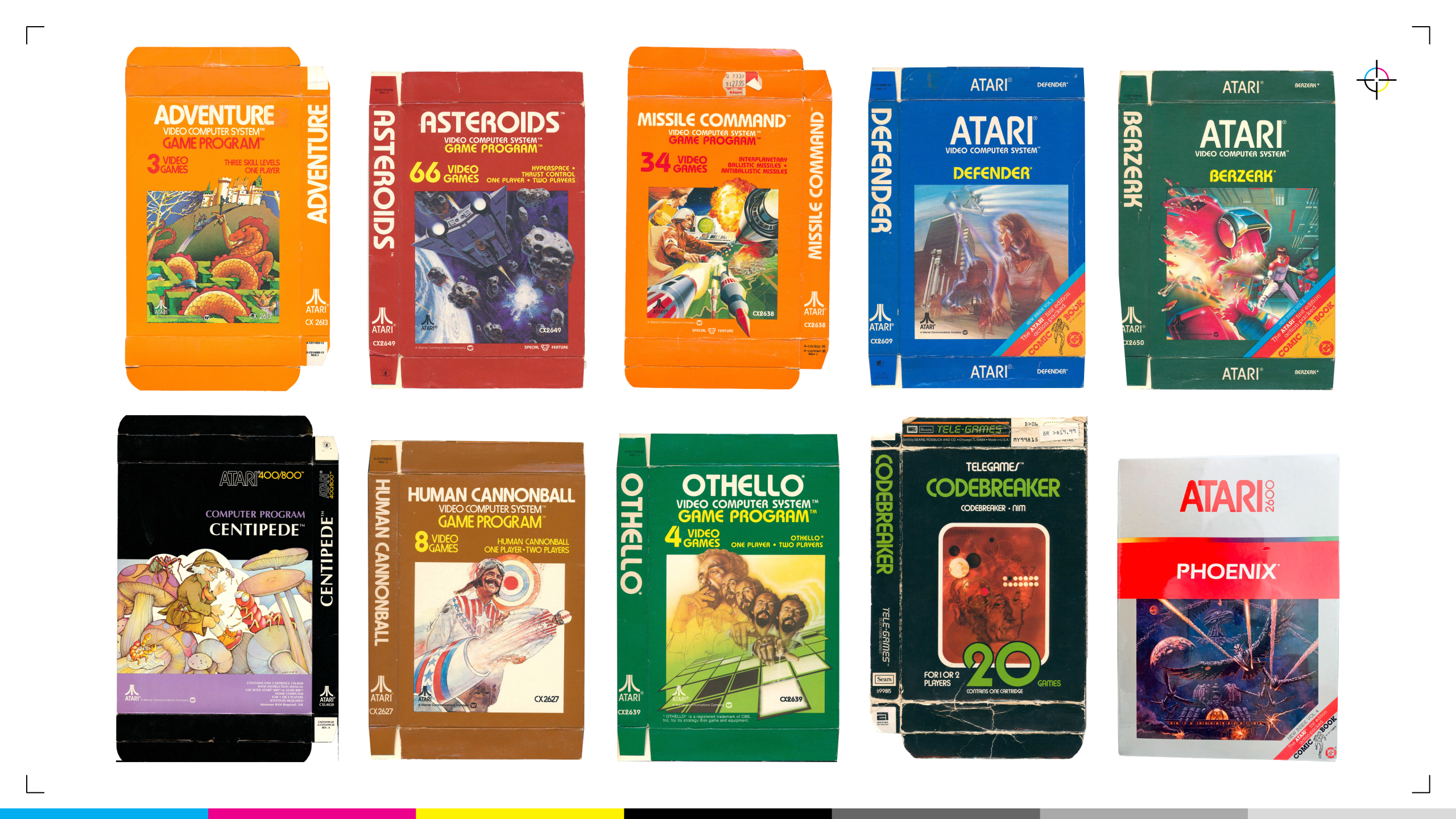
- Atari’s art and design were significant contributors to its success during the golden era of video games, from the late 70s to the early 80s.
- Until fairly recently, video game box covers served to sell the game in physical spaces and to play a role in storytelling in ways the games couldn’t do on-screen at the time.
These days, buying and consuming media is usually done completely online. Of course, there was a time in recent memory when we’d go to a physical store and buy books, movies, and music. We’d also learn about new releases from physical media like magazines, as well as TV, radio, and word of mouth.
Early home video games were no exception. In fact, the consumer experience of games on early home consoles like the popular Atari 2600 had much in common with music albums. Instead of a band, there were software developers and designers who would create a game, someone else would write the game booklet, which would include a description of the game, its story, and instructions on how to play, and finally, visual artists who would create art for the box cover, inside the included booklet, posters that would hang inside stores, and other ephemera.