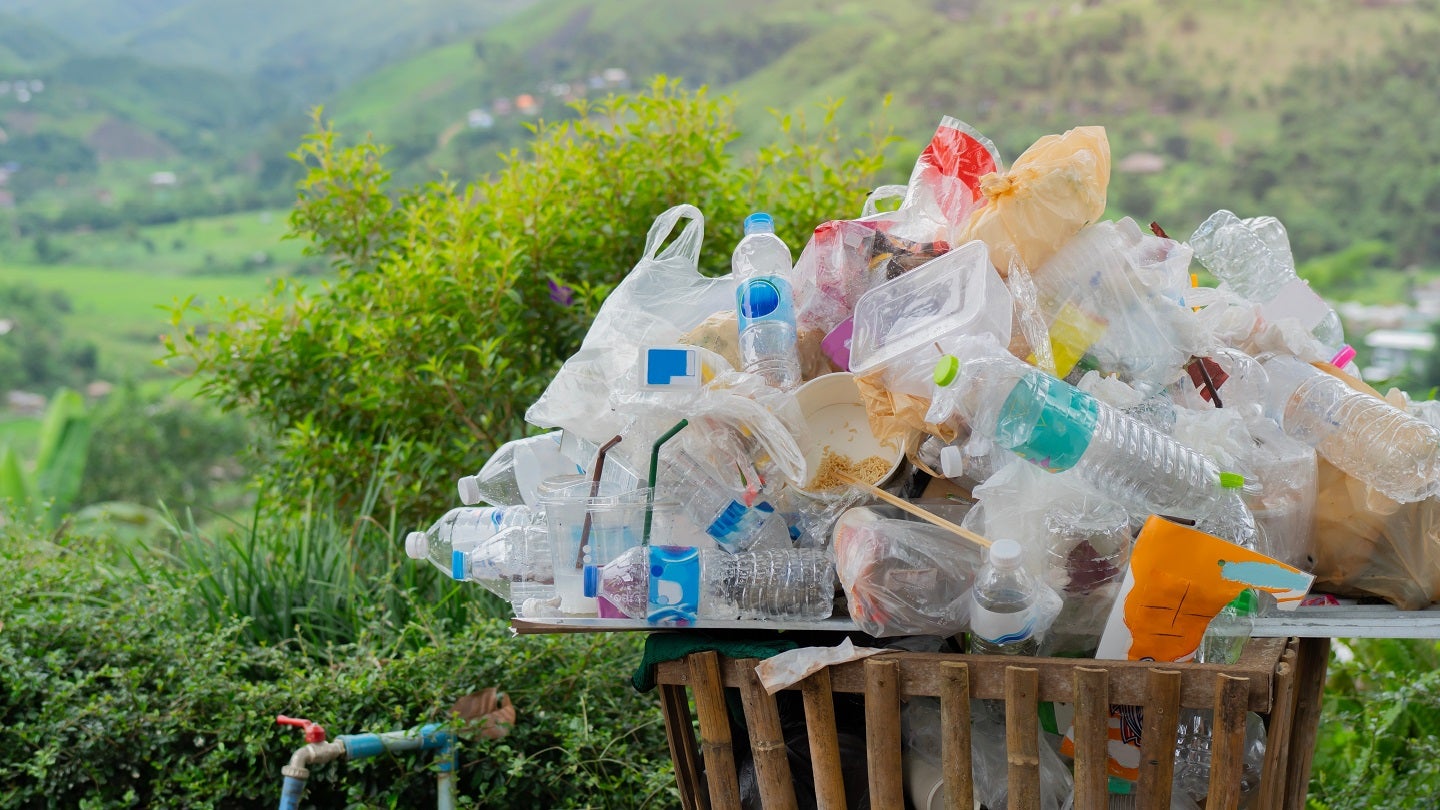
Researchers at the University of California (UC), Berkeley, have developed a groundbreaking chemical process that can transform the most prevalent forms of plastic waste into reusable hydrocarbon materials.
This innovation could significantly advance the circular economy for plastics by enabling the recycling of polyethylene (PE) and polypropylene (PP), the primary components of single-use plastic bags and hard plastics.
The catalytic process could revolutionise the way the industry handles plastic waste.
PE and PP are ubiquitous in everyday items such as shopping bags, detergent bottles, and various containers, making them a significant contributor to the global waste problem.
The technology offers a promising solution to reduce reliance on fossil fuels for new plastic production by converting plastic waste back into the monomers required to create polymers.
While polyethylene terephthalate (PET) plastics, commonly used in water bottles, were designed for recycling, polyolefins such as PE and PP represent a much larger portion of plastic waste and have lacked an efficient recycling method until now.
Access the most comprehensive Company Profiles
on the market, powered by GlobalData. Save hours of research. Gain competitive edge.

Company Profile – free
sample
Your download email will arrive shortly
We are confident about the
unique
quality of our Company Profiles. However, we want you to make the most
beneficial
decision for your business, so we offer a free sample that you can download by
submitting the below form
By GlobalData
UC Berkeley professor in chemistry John Hartwig said: “We have an enormous amount of polyethylene and polypropylene in everyday objects, from lunch bags to laundry soap bottles to milk jugs – so much of what’s around us is made of these polyolefins.
“What we can now do, in principle, is take those objects and bring them back to the starting monomer by chemical reactions we’ve devised that cleave the typically stable carbon-carbon bonds. By doing so, we’ve come closer than anyone to give the same kind of circularity to polyethylene and polypropylene that you have for polyesters in water bottles.”
The collaborative effort included contributions from graduate student Richard J ‘RJ’ Conk and UC Berkeley Graduate School professor and chemical engineer Alexis Bell.
The team’s findings were published on 29 August 2024 in the journal Science.