A new report from the Organisation for Economic Co-operation and Development (OECD) highlights the growing challenge of plastic pollution, which has severe consequences for the environment and public health.
The report shows that plastic production has surged in recent decades, leading to a rapid increase in plastic waste.
Without stronger interventions, this issue is projected to escalate further in the coming years.
Rising plastic production and waste
Between 2000 and 2019, global plastic production doubled, increasing from 234 million tonnes to 460 million tonnes. This rise in production has been accompanied by a similar increase in plastic waste.
In 2019, more than two-thirds of the total waste generated originated from short-lived products, particularly packaging (42%), consumer goods (12%), and textiles (11%).
The report suggests that without additional measures, annual plastic use and waste could increase by 70% by 2040.
Access the most comprehensive Company Profiles
on the market, powered by GlobalData. Save hours of research. Gain competitive edge.

Company Profile – free
sample
Your download email will arrive shortly
We are confident about the
unique
quality of our Company Profiles. However, we want you to make the most
beneficial
decision for your business, so we offer a free sample that you can download by
submitting the below form
By GlobalData
Plastic pollution in waterways
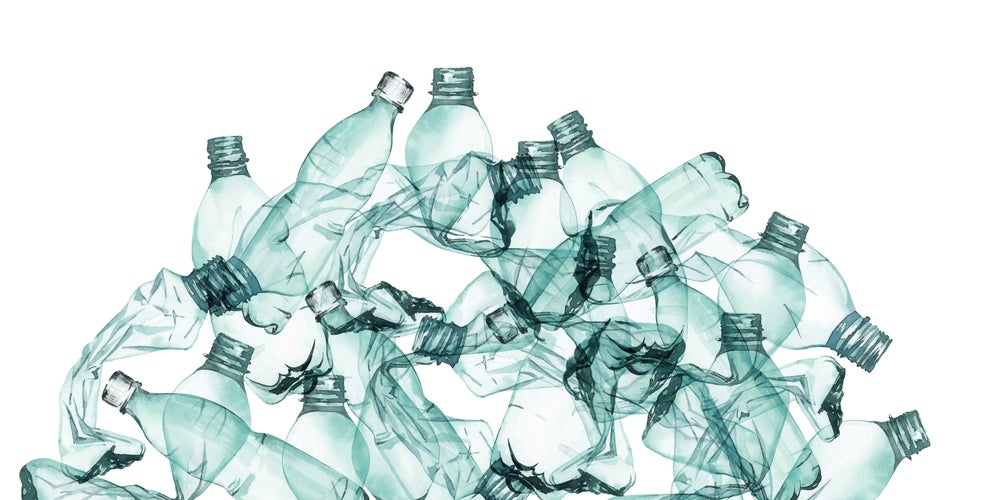
Plastic waste is not only an issue of land-based pollution but also a significant contributor to waterway contamination. In 2019, approximately 6.1 million tonnes of plastic waste leaked into rivers, lakes, and oceans.
A significant proportion of this pollution consists of ‘macroplastics’ such as plastic bottles, which account for 88% of the plastic waste found in the environment.
The remaining 12% is made up of microplastics, tiny particles from tyre wear and synthetic fibres.
If current trends continue, the leakage of plastics into the environment could double by 2060.
OECD’s call for stronger policies
The OECD stresses the need for comprehensive policy actions to address the entire life cycle of plastics.
This includes upstream policies to reduce plastic production by encouraging the use of longer-lasting products and improving recycling efforts.
Additionally, downstream policies are necessary to improve waste collection and sorting systems, helping to keep plastic waste from entering the environment.
The report also emphasises the importance of international cooperation to transition to a circular economy, where plastic materials are reused and recycled, rather than disposed of after a single use.
The OECD warns that without significant policy changes and innovation in waste management, plastic pollution will continue to pose an increasing threat to ecosystems and public health across the globe.