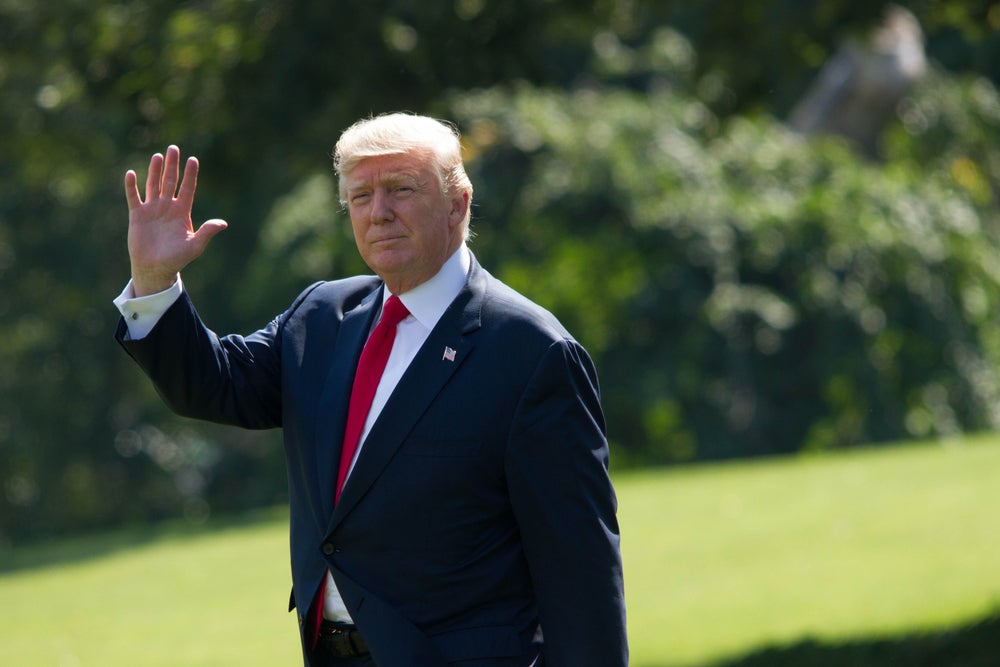
On 5 November 2024, Donald Trump was elected as the 47th president of the United States, marking a remarkable political comeback that resonated across the nation and beyond.
Trump’s policy agenda is expected to significantly influence the American economy, while also creating substantial ripple effects worldwide. Leading up to the election, global businesses had already considered potential Democratic or Republican outcomes and prepared accordingly.
With President-elect Trump set to return to the White House, his economic strategies, such as “America First” policies, tax cuts, tariffs, deregulation, and trade tensions, may soon come to fruition.
What implications does a Trump presidency hold for the packaging industry?
With potential changes that could impact tariffs, manufacturing incentives, and trade dynamics, the packaging industry might be in for some shifts.
Here’s a look at the anticipated effects on the packaging sector if Trump’s policies become a reality in 2024.
Access the most comprehensive Company Profiles
on the market, powered by GlobalData. Save hours of research. Gain competitive edge.

Company Profile – free
sample
Your download email will arrive shortly
We are confident about the
unique
quality of our Company Profiles. However, we want you to make the most
beneficial
decision for your business, so we offer a free sample that you can download by
submitting the below form
By GlobalData
Tariff policies and material costs
Trump’s proposal to implement hefty tariffs on imported goods could create a ripple effect across industries that rely heavily on raw materials, including packaging.
During his previous administration, tariffs on Chinese imports led to a substantial increase in material costs, and a similar approach could result in similar outcomes this time around.
For packaging companies that source materials internationally, particularly from China, a new round of tariffs could mean higher costs for plastics, metals, and paperboard.
The increased material costs could drive manufacturers to seek alternative suppliers outside China or potentially shift production locally.
However, experts caution that reshoring is not always a feasible option for all packaging companies due to higher domestic production costs and limited local supply of certain materials.
Instead, companies might face slimmer profit margins as they absorb the added costs, which could lead to increased packaging prices and, subsequently, higher consumer pricesssible Rollbacks on Green Manufacturing Incentives
Trump’s plans to roll back the Inflation Reduction Act (IRA) may present a challenge for packaging companies that have been benefiting from incentives for sustainable manufacturing.
The IRA, enacted under the Biden administration, provided subsidies to companies aiming to reduce their carbon footprint and invest in greener technologies.
Packaging manufacturers have increasingly tapped into these subsidies to develop eco-friendly packaging options, such as bioplastics, recycled materials, and low-energy manufacturing processes.
If these incentives are retracted, companies may have fewer resources to allocate toward sustainable initiatives. This could slow down the packaging industry’s push towards a circular economy, where waste is minimized, and materials are reused.
As a result, packaging companies might find themselves prioritising cost management over eco-innovation, potentially delaying the industry’s shift toward sustainable practices.
Tin shortages and inflationary pressures
Packaging companies operate in a globalised supply chain where materials, labour, and production facilities span multiple regions.
Trump’s proposed tariffs on countries outside China could disrupt established supply chains, as packaging firms would need to adjust to the changing landscape of import fees.
An added layer of complexity is the inflationary effect that high tariffs and supply chain interruptions could have on production costs. Higher prices on imported packaging materials may also drive inflation across the broader economy, as packaging costs contribute to overall product prices.
Experts believe that the packaging industry might face reduced consumer demand if inflation rises significantly, as higher costs tend to be passed down the line to consumers.
If demand declines, packaging firms could experience lower revenues, prompting some companies to scale back on workforce investments and technological advancements.
In a market increasingly leaning toward smart and sustainable packaging solutions, an economic slowdown could slow down innovation, affecting competitiveness in the global market.
Navigating supply chain challenges
For the packaging sector, a Trump presidency could bring both challenges and potential pivots in strategy.
From managing higher costs due to tariffs to adapting to changing consumer expectations in a potentially inflationary market, companies will need to stay nimble.
Packaging firms may benefit from strategic planning that accounts for both short-term economic fluctuations and long-term shifts in supply chains.
With environmental issues becoming a key focus worldwide, packaging companies that continue to innovate despite potential regulatory changes could gain an edge in the long run.
However, the ultimate impact of Trump’s proposed policies remains speculative and will depend on how these policies interact with broader economic conditions and industry-specific adaptations.