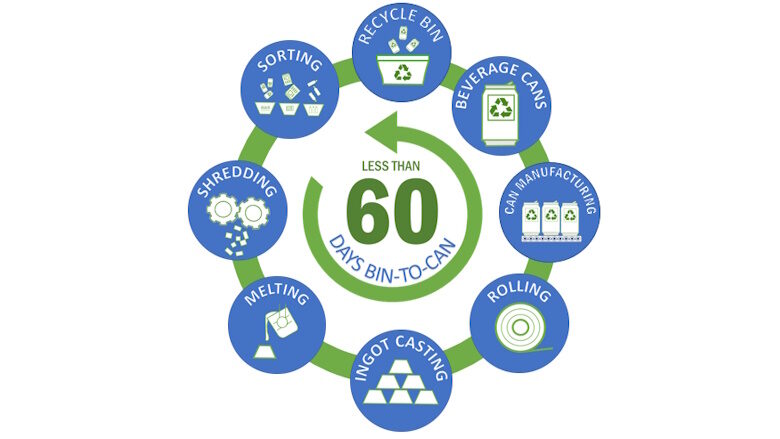
New research from circular economy and materials management consultant RRS confirms that used beverage cans (UBCs) move from recycling bin to newly formed cans in less than 60 days on average in the United States.
The study, released today on Global Recycling Day and commissioned by the Aluminum Association and Can Manufacturers Institute (CMI), demonstrates the uniquely circular nature of aluminum beverage cans, which when recycled almost always become a new can.
“Aluminum beverage cans exemplify a robust, domestic circular economy operating at scale,” said CMI President Robert Budway. “When aluminum beverage cans are recycled properly, they become a new can in less than two months on average. And nearly 97% of recycled aluminum beverage cans in the United States go on to become new cans, compared to 30–60% for glass and 34% for plastic bottles.”
According to The Aluminum Can Advantage: Sustainability Key Performance Indicators report published last year by the Aluminum Association and CMI, the average aluminum beverage can sold in the United States contained 71% recycled content as compared to 23% for glass bottles and 3-10% for plastic (PET) bottles. The report also found that 43% of aluminum beverage cans shipped in the United States were recycled, equal to recycling nearly 90,000 UBCs per minute.
“We have an enormous opportunity to recover and reuse more aluminum at a time when the industry needs this vital material back to meet growing demand and historic U.S. aluminum investment,” said Aluminum Association President and CEO Charles Johnson. “On average, Americans throw away about 15 twelve-packs worth of used beverage cans per person every year, a nearly $1.2 billion loss for the economy and our metal supply. This is unacceptable, and we must find a way to recycle more of this vital material for both our economic and national security.”
Aluminum recycling slashes energy use and emissions by 95% versus producing new aluminum, while serving a steady, reliable domestic supply chain. This rapid 60-day journey from recycling bin back to new can showcases how aluminum beverage cans lead the way in sustainable, circular packaging.