Lisbon is making history as the first European capital to roll out a city-wide reusable cup system backed by a local deposit-return model. The initiative—driven by a collaboration between the City of Lisbon, TOMRA, and the Portuguese hospitality association AHRESP—is designed to tackle plastic waste, slash emissions, and bring a smarter reuse model to the city’s bustling nightlife and hospitality sector.
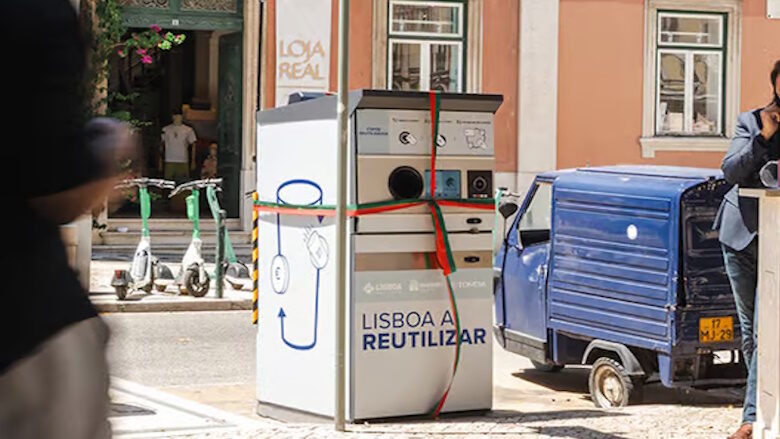
Starting June 27, the first TOMRA-operated return points went live at two historical kiosks in Praça de São Paulo and Praça do Príncipe Real. Customers purchasing drinks receive them in reusable cups, paying a deposit that is fully refunded upon return—simply by tapping their card or phone at the collection point. Full roll-out of the reusable cup system is planned for October 2025.
A smart system built for urban life
The project is powered by TOMRA’s “Rotake” system—a full-service reuse model including digital tracking, cup collection, sanitation, and redistribution. TOMRA, which pioneered fully-automated reverse vending technology, is managing the entire lifecycle of the cups to ensure efficiency, hygiene, and environmental performance.
“We’re proud to partner with Lisbon on this first-of-its-kind city system in a European capital,” said Geir Sæther, Head of TOMRA Reuse. “The system deployed in Lisbon is designed specifically for urban areas— making reuse easy, clean, and rewarding for everyone involved.”
Every night, 25,000 cups are used across Lisbon’s entertainment areas. Despite cups being labeled and sold as “reusable,” no system has been in place to collect, clean and recirculate cups.
Policy meets infrastructure
The roll-out follows the Lisbon Municipal Regulation banning single-use plastic cups, a bold move that required robust infrastructure to succeed. With TOMRA’s scalable system and strong local buy-in, the city is now ready to deliver real impact.
“Lisbon is committed to leading by example, promoting sustainable alternatives to single-use plastics and engaging partners in real change toward more conscious consumption habits. This is a concrete step toward building a culture of reuse in our city and inspiring other municipalities to follow the same path,” said Rui Cordeiro, City Councilor for Waste Management and Circular Economy, City of Lisbon.
Hospitality sector onboard
Crucial to the system’s success is participation from the hospitality sector. AHRESP, Portugal’s largest hospitality association, is helping bring cafés, bars, and nightlife venues into the reuse loop.
“This initiative represents a necessary shift for the hotel/restaurant/catering (HoReCa) sector, which now takes on an active and central role in the transition towards a more circular economy. Establishments not only gain a practical solution to comply with the new regulations, but also an opportunity to lead, together with consumers, a sustainable and positive change in habits for the city of Lisbon,” said Carlos Moura, President of AHRESP.
How it works
- Consumers receive drinks in reusable cups for a refundable €0.60 deposit.
- Cups can be returned to TOMRA collection machines, placed across the city.
- No registration needed—just tap a contactless card or phone to receive the refund.
- TOMRA manages logistics, sanitation, and redistribution for a seamless loop.
By October, the city will introduce a standardized “Lisbon cup” for all participating bars and venues in central neighborhoods, with 17 return points planned across the downtown area.
Following the Aarhus model—and raising the bar
The Lisbon initiative builds on TOMRA’s success in Aarhus, Denmark, where over 1 million cups have been returned with a return rate exceeding 85 percent after 18 months. Lisbon aims to go even further—setting the benchmark for capital cities across Europe.
“This is not just about cups. It’s about changing how cities think about resources,” added Sæther. “Lisbon is showing that with the right partners and smart policy, reuse can be mainstream, modern, and massively effective.”