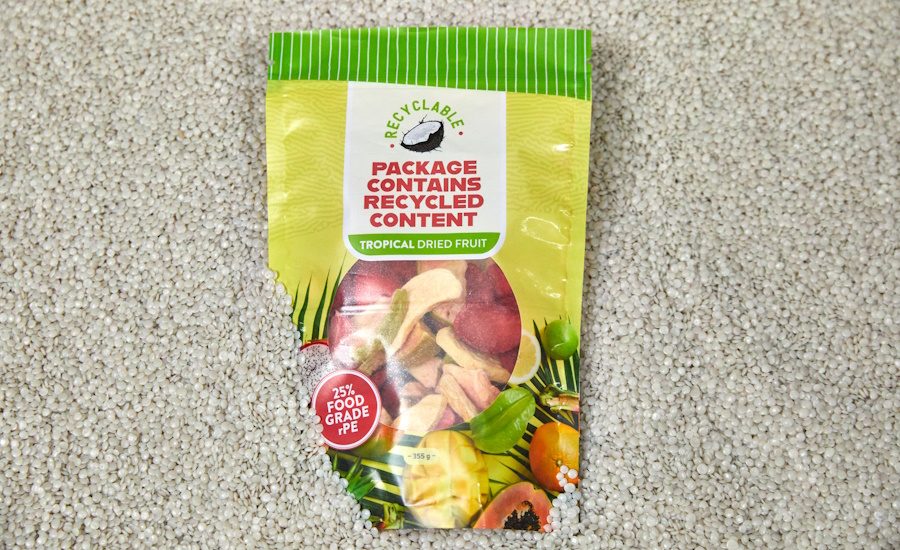
The use of post-consumer recycled (PCR) plastics in packaging has grown steadily over the last several years, but it still represents a small portion of total packaging materials. Brand owners and converters alike have questions about its quality, consistency, supply reliability, and cost impacts.
Introducing any new type of packaging is always accompanied by a degree of risk, but PCR plastic is more than a material substitution. Recycled resins represent a pivotal shift in how the plastics industry approaches production and value creation. In a market that is striving to adapt to emerging Extended Producer Responsibility (EPR) legislation and shifting corporate sustainability goals, converters who embrace the complexities of PCR adoption through preparation and a strategic mindset will position themselves as trusted partners to their customers.
Understanding the realities of the broader PCR plastic landscape is essential to reframe risk as a pathway to long-term growth. This requires a fundamental shift in mindset to view post-use plastic as a valuable commodity instead of single-use waste. Recent survey data found that in the U.S. and Canada, operational mechanical recycling facilities have the capacity to recycle an additional 2 billion pounds of plastic per year across all major resin types from rigids to flexibles, but capacity alone is not enough to expand adoption. Increased demand for PCR plastics is critical for driving improvements in recycling collection and developing additional end markets for recycled materials. Converters play a central role in helping build these markets, demonstrating to brand owners how PCR plastics can be integrated into packaging solutions.
By aligning on goals, setting realistic expectations, and collaborating across the value chain, converters can design PCR solutions that meet market demands and support the broader transition to a plastics circular economy.
Define Goals and Benefits
Success with PCR materials begins with clarity of purpose. Define the most important goal for the new product, whether that is related to market differentiation, regulatory compliance, or unlocking new business opportunities. This could involve research into the requirements of new and upcoming EPR laws, such as PCR content mandates and material fees. Working with knowledgeable PCR resin suppliers will help streamline this process, allowing converters to develop solutions for brand owners that contain PCR materials to meet their needs. Articulating the goals and benefits upfront also helps keep development efforts focused, preventing costly setbacks due to competing priorities.
Design for Specific Applications
The intended application for the PCR product will determine the product development approach. Packaging films, for instance, are often repurposed across multiple product lines. A film originally designed for crackers may have been repurposed for cookies over time, but a packaging redesign with PCR materials is the perfect time to assess the true requirements to prevent over-engineering. Knowing the precise performance requirements—such as clarity or moisture and oxygen barrier properties—shapes the design process. Converters should showcase their ability to match technical realities with business objectives, ensuring that the PCR packaging addresses the application conditions such as shelf life and satisfies their quality assurance procedures.
Prepare for Differences
PCR resins are different than virgin resins. From changes in color to higher levels of gels, these differences should not prevent the use of PCR. It is important that converters understand what the possible changes will be in appearance and performance to prepare both production employees and customers. Communicating these differences openly with brand owners helps establish confidence that the converter is prepared to manage them effectively. Converters should engage with PCR suppliers to learn about their sourcing practices, production processes, and control systems. Selecting a PCR supplier based on their feedstock and process capability is crucial for securing reliable, consistent, high-quality PCR resins.
Set a Realistic Timeline
Developing PCR packaging requires time. Virtual modeling can help identify the best options for PCR in multilayer films, providing initial performance predictions that can lower the number of physical prototypes needed. Still, initial runs with PCR resins often require fine-tuning before optimal performance is achieved. Early production with PCR should be viewed as a learning phase, where testing and iteration lead to success. Working with PCR suppliers who can help produce prototypes of the modeled structures is key. Converters need to budget adequate time to design products that will scale up and provide reliable performance. Establishing a formal, organized process with clearly defined roles, leadership alignment, and a dedicated project lead will help ensure that projects stay on track.
Make Processing Adjustments
Different blend ratios and film structures are necessary options to test, but equipment settings also have a significant impact on success rates. PCR structures often require adjustments to packaging equipment. Careful observation and a willingness to experiment is important during the evaluation phase. Converters should anticipate process modifications and consult with both equipment manufacturers and resin suppliers to learn about raw material properties and equipment capabilities. This proactive approach not only reduces risk but also strengthens relationships across the supply chain.
Ultimately, the adoption of PCR materials can reframe risk as an opportunity to strengthen the value of plastics in a circular economy. Converters are at the center of this transformation, helping brand owners shift their perspective from short-term performance metrics to long-term system benefits. By prioritizing PCR materials, converters not only respond to customer and regulatory demands, but also contribute to shaping a more resilient plastics industry.
This leadership requires more than technical execution. It calls for education, transparent communication, and a willingness to collaborate across the value chain. Converters who position themselves as guides in this process will help brand owners understand trade-offs, navigate new regulations, and unlock innovation.