Emerald Packaging, the largest supplier of retail flexible packaging for the produce industry, today announced a significant sustainability milestone. Over the past year, the company has replaced over one million pounds of virgin polyethylene (PE) with post-consumer recycled (PCR) material, marking a step forward toward establishing a circular economy and sustainability for flexible plastic packaging.
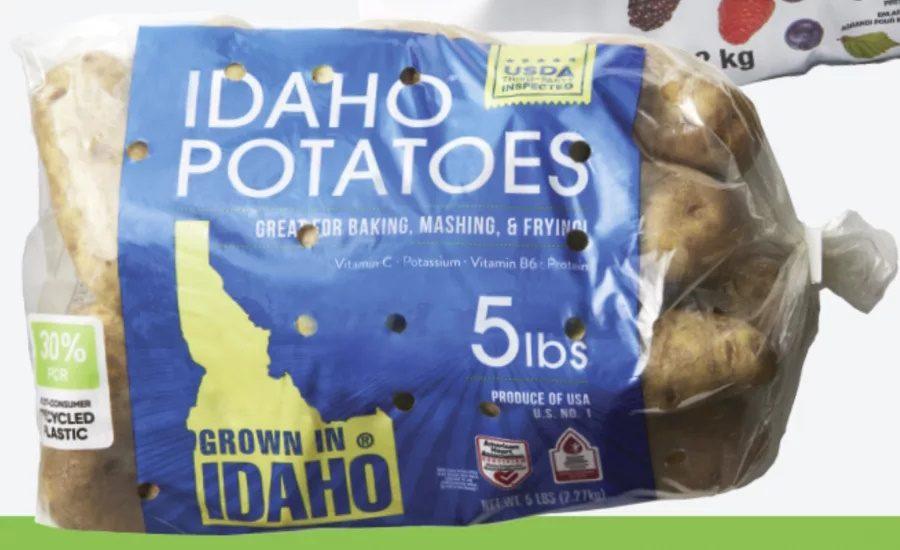
Emerald Packaging’s shift toward PCR directly supports the sustainability goals of many of its food industry partners. Most recently, Emerald Packaging partnered with Idaho Package, Wada Farms and Walmart to introduce the first bag for the potato category with 30% food-contact PCR content. This project pushed the limits of PCR, given the exacting standards that potato bags must meet, like impact resistance. This initiative aligns with Walmart’s Project Gigaton, targeting a one-billion metric ton emissions reduction by 2030. To date, Walmart has eliminated more than 200,000 pounds of virgin plastic in its potato packaging.
D’Arrigo Bros. of California, the country’s largest romaine shipper, was the first to partner with Emerald. The companies rolled out PCR bags across D’Arrigo’s entire product line, including romaine lettuce hearts and iceberg lettuce. The bags contain 30% food-contact PCR and have eliminated over 600,000 pounds of virgin plastic from the supply chain.
“This milestone reflects Emerald Packaging’s deep commitment to the environment and our technical ability to deliver high-quality packaging while reducing the reliance on virgin plastics,” said Kevin Kelly, CEO of Emerald Packaging. “We’ve worked closely with our supply chain partners and customers to make PCR a viable and scalable part of our product offerings for those who are seeking sustainable options that meet performance standards without compromising environmental values.”
Packaging Strategies interviewed Kelly in October to discuss the challenges of getting sustainable flexible packaging into the market. That podcast interview can be found here.
Integrating PCR materials not only diverts plastic waste from landfills but also significantly reduces the carbon emissions associated with the production of virgin plastic. According to a 2004 study by University of California scientists, increasing the use of PCR has the most significant impact on waste plastic tonnage and GHG reduction compared to any other possible environmental action.
With over six decades at the forefront of produce packaging innovation, Emerald Packaging is the largest plastic packaging manufacturer for produce in the United States. For more than 20 years, Emerald Packaging has led industry efforts to address plastic waste, most recently helping shape legislation in California that addresses the need for a better recycling infrastructure. Emerald is one of the few manufacturers to win a Green Business certification for its waste, water, and energy reduction efforts.
For more information on Emerald Packaging and to learn more about the company’s sustainability goals, visit www.empack.com.