TL;DR
Paper packaging offers strong protection and supports sustainability. Many uncoated papers qualify as “Green” under UK EPR RAM, potentially lowering fees, though plastics can still be cheaper due to lower weight. Paper works across key protective applications – void fill, cushioning, block & bracing, and surface protection – and can replace foam‑in‑place with recyclable, lower‑CO₂ options.
Result: effective protection with recyclable, future‑ready packaging.
Many businesses want to cut plastic use and make their packaging easier to recycle. Paper packaging has emerged as a versatile and effective solution that supports these goals.
Plus, from a regulatory perspective, paper-based materials can enable businesses to mitigate environmental levies. For example, under the UK’s Extended Producer Responsibility (EPR) framework papers that are uncoated and easily recyclable are often classified as “Green” so they attract lower EPR fees compared with plastic materials.
However, it’s important to take a holistic view when making material choices. You need to choose a solution that meets with your goals, legal obligations and protection requirements. Making a straight swap from plastic to paper might seem simple, but you should consider trade-offs like paper often weighing more than plastic. The most effective solution for you will come from evaluating both sustainability performance and total packaging usage.
Choosing the right paper solution will also depend on how your products need to be protected during storage and transit.
In this guide, we explore the most common protective packaging applications and how paper solutions can help you achieve both protection and sustainability.
Why choose paper packaging?
Many businesses are turning to paper packaging because it supports both product protection and environmental goals.
Key advantages include:
- Recyclability – most paper packaging can be recycled through standard kerbside recycling streams.
- Reduced plastic use – switching from plastic packaging to paper alternatives can help reduce plastic waste and associated pollution.
- Raw material sustainability – paper is made from a renewable resource and can often be made from recycled materials too.
- Operational efficiency – modern paper packaging systems can increase packing speed while reducing storage space compared with pre-formed materials.
- Strong protection – engineered paper packaging can provide effective protection for a wide range of products.
Choosing the Right Solution
Selecting the right paper packaging solution depends on several factors, including:
- Product weight
- Product fragility
- Transit conditions
- Box size and shape
- Packing speed requirements
In many cases, the most effective packaging strategies combine multiple protective approaches – such as void fill with cushioning or surface protection with block and bracing.
Working with a packaging specialist can help identify the most efficient and sustainable solution for your specific requirements.
Types of protective applications
Paper packaging can be used in multiple ways, depending on the type of protection required. Here are the key applications explained.
Void Filling
During shipping, empty spaces inside a box can allow products to move around, increasing the risk of damage. Even tiny amounts of movement during transit can lead to products knocking against each other or the sides of the carton.
Void fill packaging is designed to fill these gaps and stabilise products within the box, helping keep items securely positioned throughout the delivery journey.
Paper-based void fill solutions create lightweight yet strong structures that occupy space and restrict product movement. Systems like the Ranpak Trident and Trident Mini dispense a triangular paper structure that can reduce costs by 15-25% compared to traditional paper packing systems. When dispensed, the paper expands and conforms to the product and carton.
This type of protective packaging is particularly well-suited to high-volume packing environments such as:
- eCommerce fulfilment operations
- Retail distribution centres
- Third-party logistics (3PL) warehouses
- Manufacturing dispatch operations
Because paper void fill can be produced on demand at packing stations, it improves packing efficiency while reducing the need to store bulky packaging materials.
How Paper Void Fill Works
Paper void fill is typically dispensed through a paper conversion system that transforms flat paper into a three-dimensional structure. Packers can control how much material is used to create a stable pack without overfilling.
Void fill paper can be placed:
- Around products to prevent lateral movement
- Between multiple items packed in the same carton
- On top of items to prevent vertical movement during stacking and transit
Compared with loose fill materials such as plastic packing peanuts, paper void fill offers several advantages:
- Easily recyclable through standard paper recycling streams
- Cleaner packing environments with less static or scatter
- Consistent material production directly at the packing station
- A positive unboxing experience for customers
Void fill is most effective when the main risk during transit is product movement rather than direct impact. For fragile items, it can be combined with cushioning or surface protection for added protection.
Cushioning
Some products require more than simply filling empty space, they need protection from shock and impact during transit.
Cushioning packaging absorbs energy from drops, vibration and handling to protect fragile or delicate items.
Paper cushioning materials can be engineered into spring-like structures that absorb impact while remaining fully recyclable. They are commonly used for protecting:
- Electronics
- Glassware & ceramics
- Cosmetics
- Pharmaceutical products
- Precision equipment
Systems like the Ranpak PadPak Guardian 30, which has a small footprint, is designed for both medium and high-volume cushioning and can be used with 1 and 2 ply papers.
Paper as an alternative to foam-in-place
Paper cushioning is increasingly used as a sustainable alternative to foam-in-place packaging.
Traditional foam-in-place solutions use chemicals that expand to form a mould around the product. While effective, these materials can be difficult to recycle.
Paper provides a simpler and more sustainable option while still delivering strong protective performance.
One common method is to roll paper lengthways into a coil or “paper snail” shape, creating a cushioning layer. This can be placed at the bottom of the box before the product is packed, with another layer added on top.
This technique helps absorb impact while stabilising the product during transit.
Benefits of paper cushioning as a foam alternative include:
- Easy recyclability through paper recycling streams
- No expanding chemicals
- A more sustainable packaging option
- Effective impact protection
For businesses looking to replace foam packaging, paper cushioning offers a practical balance between protection, efficiency and sustainability.
Block and bracing
For heavier or irregularly shaped products, filling empty space alone may not provide enough protection. Block and bracing solutions secure items firmly within the carton to prevent shifting during transit.
Unlike void fill, which stabilises products by filling space, block and bracing locks products into position, preventing them from sliding, rotating or contacting the carton walls.
Paper-based block and bracing materials create strong structural supports within the box. These supports hold products securely and help maintain pack stability throughout transit.
This approach is commonly used for:
- Industrial components
- Automotive parts
- Machinery and equipment
- Heavy electronics
- Multi-component shipments
How paper block and bracing works
Paper block and bracing materials are typically produced using paper conversion systems that create dense layered or folded paper structures capable of supporting heavier items.
These structures can be placed strategically to prevent movement, for example:
- Along the sides of products
- Between multiple items
- At the ends of products to stop shifting
- Around irregular shapes to create a stable pack
Because paper is both flexible and strong, it can be shaped around products to create customised support without the need for moulded inserts. The Ranpak Guardian 30 is a versatile system that can produce pads suitable for blocking and bracing.
Surface protection
In many cases, protecting a product isn’t just about preventing movement or impact, it’s also about protecting the surface finish.
During packing and transit, products can be exposed to friction, abrasion, dust or contact with other items in the carton. Without protection, this can lead to scratches, scuffs or cosmetic damage.
Surface protection materials act as a barrier between the product and its surroundings, helping maintain product quality throughout the supply chain.
Paper-based surface protection materials wrap around products to create a protective layer between the item and other packaging components.
This is particularly important for products such as:
- Furniture and wooden components
- Painted or coated parts
- Metal components
- Glass panels and mirrors
- Ceramics and decorative items
- Consumer electronics
How Paper Surface Protection Works
Paper wrapping materials provide lightweight protection against abrasion and surface contact. Products can be wrapped individually or separated within cartons to prevent surfaces touching during transit.
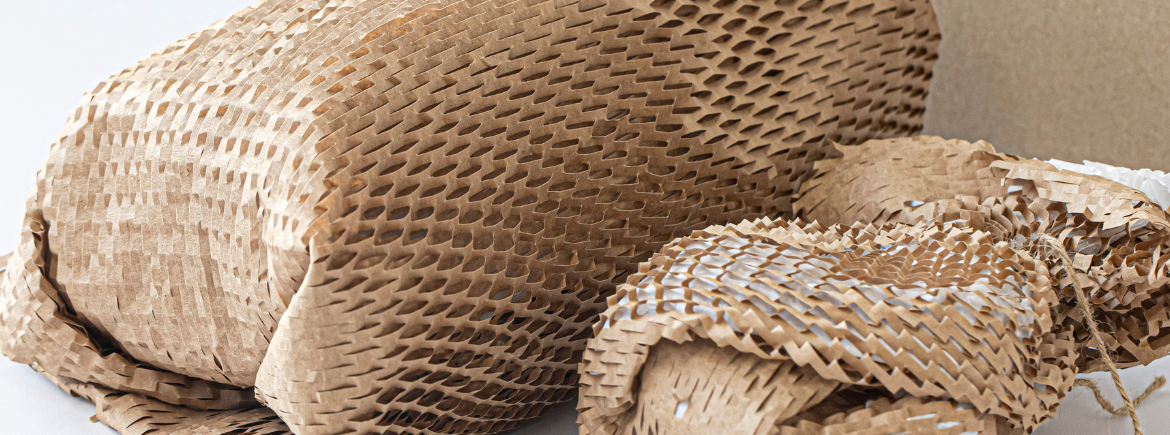
Some paper materials also feature textured or embossed structures that create air pockets, helping reduce marks caused by vibration. A good example of this is the Ranpak Geami MV system. When the paper is pulled through the system it expands to form a honeycomb like structure for protection, it can be used with a tissue paper liner to protect surfaces.
Surface protection paper can be used to:
- Wrap individual products before packing
- Separate items within a carton
- Protect delicate finishes before additional protective packaging is added
Surface protection is often combined with other packaging techniques such as cushioning or void fill to create a complete protective packaging solution.
Paper protection in summary
Paper-based protective packaging provides a flexible and environmentally responsible way to protect products throughout the supply chain.
By understanding different applications, from void filling and cushioning to block and bracing and surface protection, businesses can select solutions that deliver both reliable protection and improved sustainability.
As organisations continue to prioritise recyclable packaging materials, paper solutions will play an increasingly important role in modern packaging strategies.
How Macfarlane Packaging can help
Choosing the right paper packaging solution involves more than selecting a material, it requires understanding how products move through your packing operation and supply chain.
At Macfarlane Packaging, we work closely with businesses to assess their products, packing processes and distribution environments before recommending the most appropriate protective packaging solutions.
Our team can help identify where paper-based solutions are most effective across applications such as void fill, cushioning, block and bracing and surface protection, while also considering recyclability, EPR requirements and packing efficiency.
With access to a wide range of paper packaging materials and conversion systems, we can help you implement solutions that improve product protection, streamline packing operations and support your sustainability goals.
If you’re exploring ways to optimise your protective packaging or transition to more sustainable materials, our experts can help you find the right solution for your business.