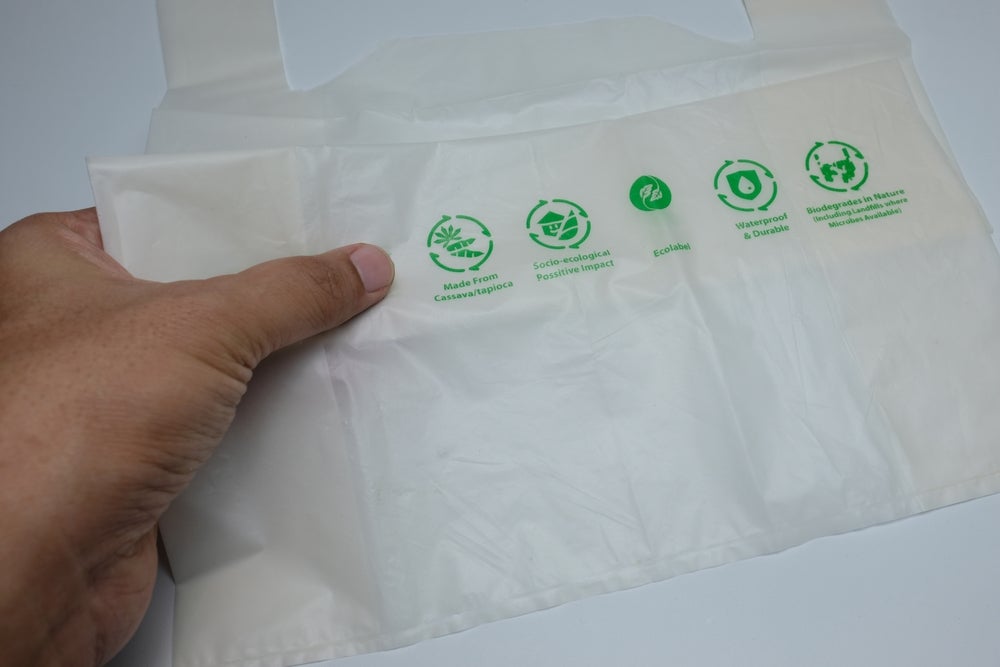
Europe’s next-generation packaging materials are moving from pilot projects into early commercial use, as companies respond to tighter plastic regulation and growing pressure to reduce waste.
The market is no longer focused on a single replacement for plastic. Instead, multiple material systems are developing in parallel, each aimed at different packaging functions such as food films, protective packaging, and specialist applications.

Discover B2B Marketing That Performs
Combine business intelligence and editorial excellence to reach engaged professionals across 36 leading media platforms.
Industry development is increasingly shaped by scalability, feedstock availability, and compliance with European sustainability rules. Some solutions are already entering industrial production, while others remain at pilot or early deployment stage.
Mycelium foams
Mycelium-based packaging, grown from fungal networks on agricultural waste, is one of the most established alternatives for protective packaging in Europe.
These materials are typically moulded into foam-like shapes used for cushioning electronics, cosmetics, and fragile goods. Production is based on biological growth processes rather than petrochemical manufacturing.
Mycelium packaging is now moving further into commercial supply chains, particularly in Western Europe, where it is being adopted as a replacement for expanded polystyrene in selected categories.
A common industry view is that mycelium is already “closer to industrial scale than most bio-based alternatives”, although production capacity and cost remain limiting factors.
However, the material is not suitable for flexible films or liquid barriers, which limits its use to protective packaging rather than food wrapping or sealing applications.
Seaweed and cellulose films
Seaweed and algae-based materials are emerging as one of the fastest-growing categories for compostable packaging films in Europe. These materials are derived from marine biomass and processed into thin, flexible films designed for food and consumer goods packaging.
Cellulose-based coatings and paper-derived barrier films are also expanding in parallel, often used in food service and retail packaging.
Several European trials are focused on replacing single-use plastic films with seaweed-based alternatives, particularly in premium food and FMCG categories. Industry participants describe this segment as “one of the most regulation-driven areas of packaging innovation”, reflecting the impact of EU packaging waste rules.
These materials are positioned as direct substitutes for plastic films, although scaling production and maintaining consistent performance under industrial conditions remain key challenges.
Waste-derived biopolymers
A third category focuses on converting biological waste streams into functional packaging materials. This includes agricultural residues, food waste, and marine by-products.
One example is Scotland-based Cuantec, which develops packaging materials from shellfish waste. The process extracts chitin from crustacean shells and converts it into chitosan-based films with antimicrobial properties.
The company’s approach reflects a broader shift in the sector towards circular feedstocks. Instead of replacing plastic with crop-based materials, these systems aim to reuse existing industrial waste streams.
Cuantec and similar developers are positioned in an early commercial phase, with attention on integration into seafood and chilled food supply chains.
At the same time, large-scale bioplastics producers using plant-based inputs, such as PLA and starch blends, continue to dominate volume production. These materials are more mature in global supply chains but are often criticised for relying on agricultural feedstocks.
Across this segment, development is increasingly described as a transition from “material substitution to system redesign”, where packaging is linked more closely to waste collection, recycling, and industrial ecology.
Europe’s next-generation packaging landscape is therefore not defined by a single replacement for plastic, but by a set of competing material pathways. Each targets different functions within the packaging system and sits at a different stage of industrial maturity.