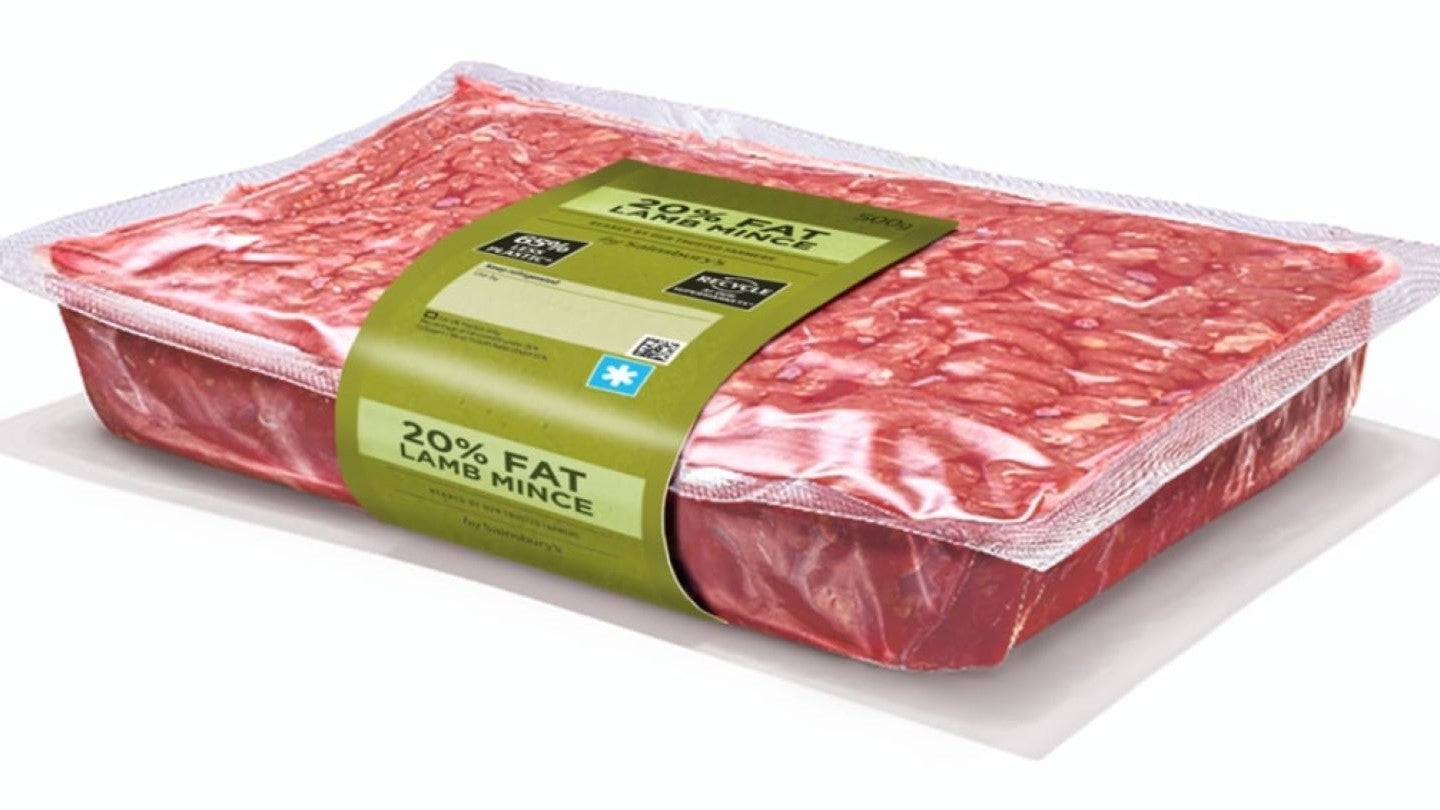
Sainsbury’s has made a significant stride towards reducing plastic waste by claiming to have become the first major UK retailer to transition its entire fresh lamb mince range to vacuum-packed packaging.
This move is expected to save a substantial 26 tonnes (t) of plastic annually.
Access the most comprehensive Company Profiles
on the market, powered by GlobalData. Save hours of research. Gain competitive edge.

Company Profile – free
sample
Your download email will arrive shortly
We are confident about the
unique
quality of our Company Profiles. However, we want you to make the most
beneficial
decision for your business, so we offer a free sample that you can download by
submitting the below form
By GlobalData
The new vacuum-packed packaging replaces traditional plastic trays, resulting in a 65% reduction in plastic per product.
This change will be implemented across all Sainsbury’s fresh lamb mince offerings, starting at just £3.95 ($5.19) for 250g.
Customers can now purchase these products both in-store and online.
The vacuum-packing process ensures optimal freshness by eliminating oxygen, a common cause of product spoilage. This not only extends the shelf life of the product but also enhances its freezer durability.
Despite the packaging change, customers can expect the same high-quality lamb mince content they’ve come to appreciate from Sainsbury’s.
QR codes on the packaging will provide convenient cooking tips.
“We know customers want us to reduce plastic packaging and that’s why we’re committed to making bold changes which benefit the environment as well as helping customers to reduce plastic waste at home,” said Richard Crampton, director of Fresh Food at Sainsbury’s.
“Once again, we’re the first major supermarket to switch to vacuum-packed packaging on a popular product that our customers buy week in, week out. This change more than halves the plastic used in our lamb mince range.”
The new packaging is designed to be recyclable in-store, including at Sainsbury’s flexible plastic recycling collection points. This step aligns with the retailer’s broader goal of halving its own-brand plastic packaging usage by 2025.
Earlier this year, Sainsbury’s made headlines by switching from plastic to cardboard packaging for its own-brand mushrooms, saving over 775y of plastic annually.
This latest move further solidifies the retailer’s position as a leader in sustainable packaging practices.