Thanks to the rise of AI, the design industry has found itself caught in a power struggle between efficiency and creativity. Every day, we witness new tools that promise “optimized design” or “automated creativity.” We’ve seen everything from prompt-generated moodboards and instant website generators to wireframe mockups generated by clicking a button. While these new AI tools promise to accelerate everything, the big question is what happens to creativity when design is reduced to automated tasks.
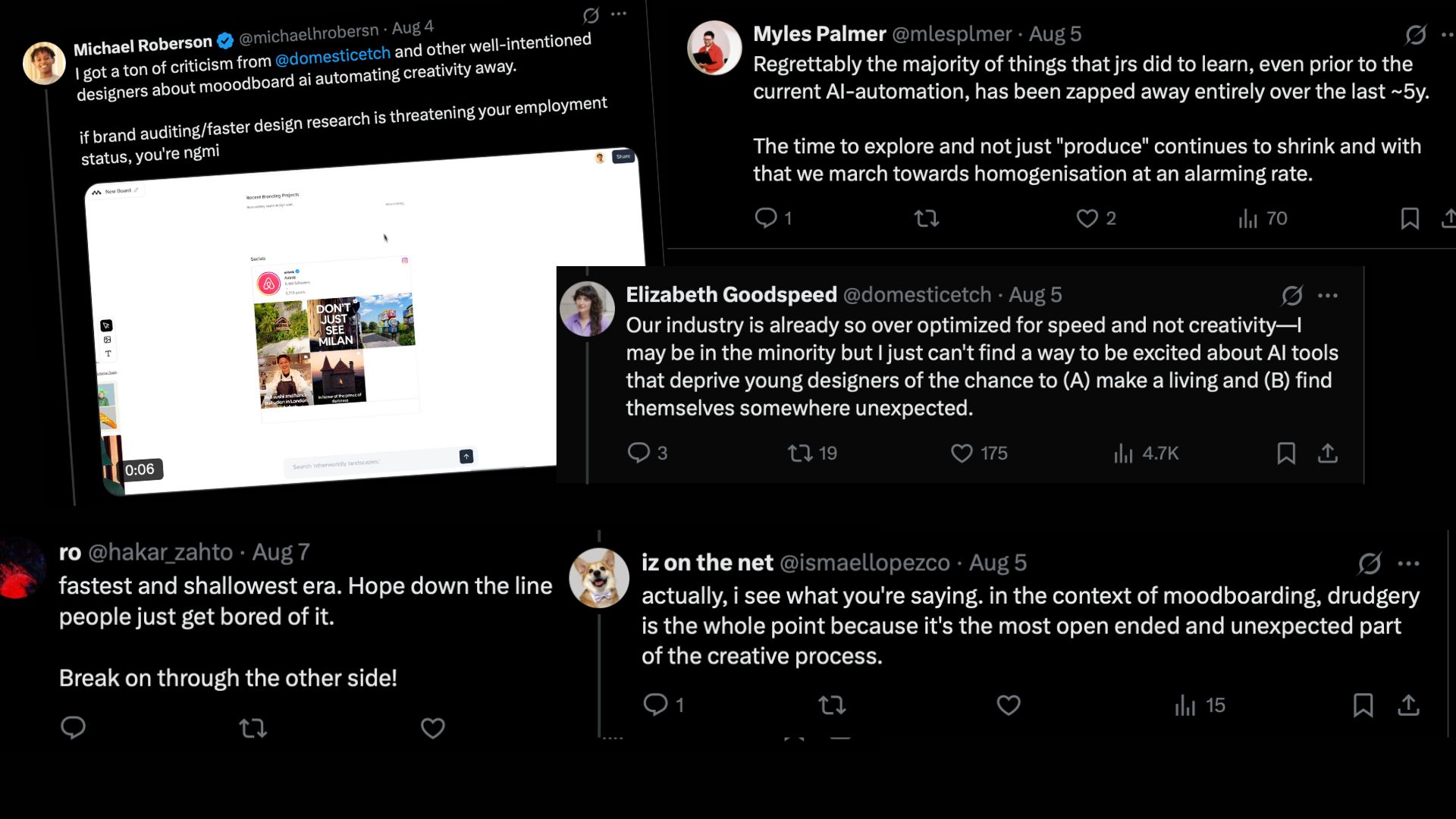
Elizabeth Goodspeed, designer and writer, captured this tension in a recent viral thread on X. She reflected on how much of her creative expertise was built in the slog of junior-level work with tasks like brand audits and moodboards that forced her to look closely, spot patterns, and translate abstract strategy into visual systems. “If that had been automated,” she wrote in the thread, “there’s no way I would have slowly built up the expertise I have now, or discovered any passion for close looking.”
Her concern speaks to a deeper problem, one that showcases that automation in design threatens to hollow out the very processes that make creative thinking possible.