Peter Fox, CEO, SOMIC Packaging Image courtesy of SOMIC Packaging
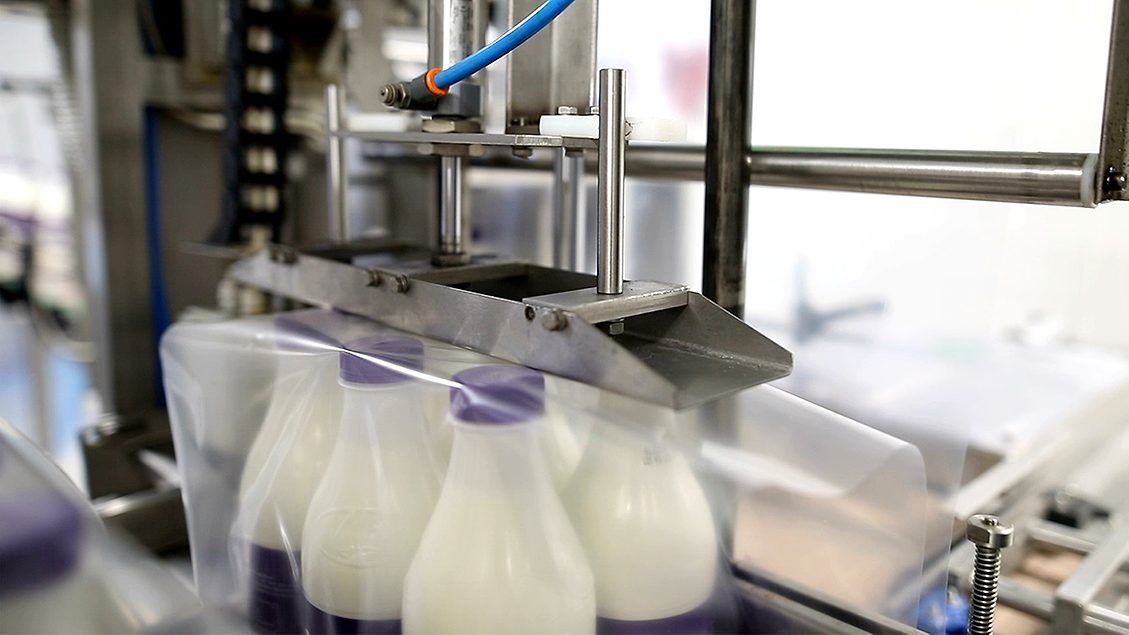
Secondary packaging in dairy refers to the outer layer of packaging that groups, protects and transports individual primary packages. Examples of secondary packaging refer to cardboard sleeves holding a multipack of yogurt, or corrugated trays holding bottles of milk. The main roles of secondary packaging include protecting products during distribution, bolstering logistical efficiency and enhancing shelf stability. In dairy, where cold chain integrity is critical, secondary packaging practices must also support temperature management and moisture resistance.
In order to get a better understanding of the latest trends and innovations in secondary packaging, Dairy Foods had a conversation with Peter Fox, CEO of SOMIC Packaging. Among many other areas of expertise, SOMIC Packaging specializes in automated secondary packaging machinery for the dairy industry. The company’s modular packaging machines securely package products into shelf-ready cartons, and they are applicable for dairy staples like cheese, yogurt, butter and milk.
Read the full conversation below.
PS: What role does SOMIC have in secondary dairy packaging?
Fox: SOMIC has a strong presence in automated secondary packaging for the dairy industry. While cheese packaging represents our largest market segment, we are also expanding in cultured dairy applications with wraparound tray packers and retail-ready tray-and-cover solutions.
Our systems are designed to run a wide range of package formats, including wraparound cases, die-cut trays with cup containment features and tray-cover applications. This flexibility is especially valuable for dairy producers who are serving diverse retail channels, and for evolving packaging requirements.
PS: What are some of the biggest factors to consider when it comes to dairy packaging?
Fox: One of the biggest considerations in dairy packaging is understanding the unique physical characteristics of the product. In cheese applications, this includes product fragility as well as variations in size, shape, and density. Cultured dairy products also present their own challenges, with formats ranging from rigid cups to flexible pouches and tubes.
From a machinery standpoint, properly designed infeed, collation, and product-handling systems are essential. It’s also important to define retailer packaging requirements early in the process. We do this to ensure the system has the flexibility to accommodate future package formats.
PS: Most people think of primary packaging when it comes to dairy. What considerations does secondary packaging entail that maybe aren’t as present in primary packaging?
Fox: Secondary packaging has evolved well beyond its traditional role of product protection and transportation. Today, it also serves as an important marketing tool, particularly in club store and retail environments.
Packaging design, material selection and print quality all contribute to shelf presence and purchasing decisions. Shelf-ready packaging and variety pack formats add value for both retailers and consumers. While protecting the product remains critical, secondary packaging is increasingly viewed as a brand-building opportunity rather than simply as a cost center.
PS: What are the unique challenges that dairy presents compared to other food or beverage products?
Fox: Product variability is one of the biggest challenges in dairy packaging. Maintaining product control through the infeed, collation, and grouping processes is critical to preventing damage or product loss.
SOMIC’s modular machine platform is particularly well suited for these applications. It allows us to tailor functional groups and handling methods for delicate dairy products while maintaining high efficiency and reliability.
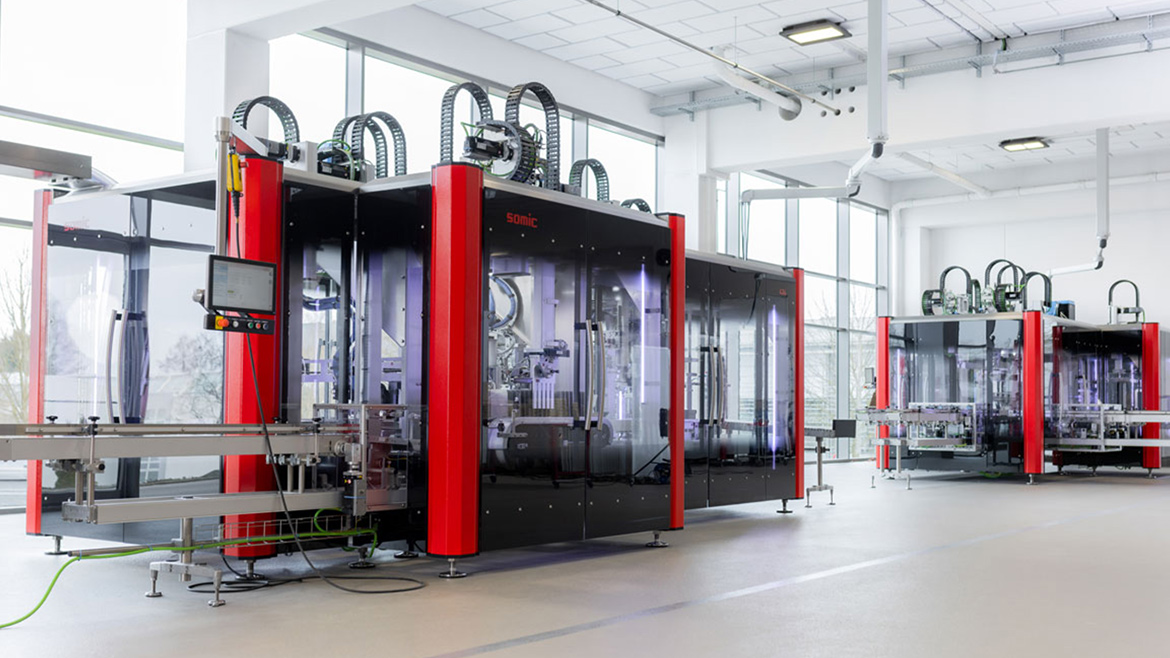
SOMIC’s recently introduced 434 platform features automatic machine adjustments that can reduce changeover times by up to 50%. Image courtesy of SOMIC Packaging
PS: How has a recent push for sustainable packaging impacted the industry as a whole, and specifically, SOMIC’s packaging process?
Fox: Sustainability initiatives are having a significant impact across the packaging industry, and SOMIC is well positioned to support these efforts. For example, wraparound packaging helps reduce the overall material usage compared to traditional case styles.
Our corrugated and paperboard handling systems are designed to support recycled-content materials through advanced blank handling and folding technologies. At the same time, lightweight and reduced-material primary packages require gentler product handling, an area where we have always focused on. Gentle handling is a core part of the SOMIC philosophy.
PS: What advancements are taking place when it comes to machinery in secondary dairy packaging?
Fox: SOMIC recently introduced the 434 platform. It features automatic machine adjustments that can reduce changeover times by up to 50%, a major advantage in the high-changeover dairy environment.
Last month at interpack, we also launched Eagle Eye and the SOMIC Connect app. Eagle Eye uses strategically placed cameras throughout the machine to capture video before and after a fault occurs. This footage, along with machine fault data, can be quickly shared with our support teams or plant personnel for faster troubleshooting. Combined with SOMIC Connect, these technologies are being further developed to support real-time machine analysis and predictive maintenance, helping improve long-term overall equipment effectiveness (OEE) and overall system performance.
PS: On a larger scale, what trends do you see moving forward?
Fox: We see machine learning, AI and advanced machine monitoring becoming some of the most significant developments in secondary packaging over the next several years. The combination of AI-driven analytics and real-time machine data will help manufacturers improve machine performance, reduce downtime, and optimize OEE. Predictive maintenance and smarter automation will continue to drive efficiency across the dairy packaging industry.