In the fast-moving world of flexible packaging, pouch converting has emerged as both a growth engine and an application segment under mounting pressure. Across North America, converters are navigating a convergence of market demands: shorter runs, sustainability goals, labor shortages, and rapid SKU proliferation, as these forces reshape how machinery is specified, run, and upgraded.
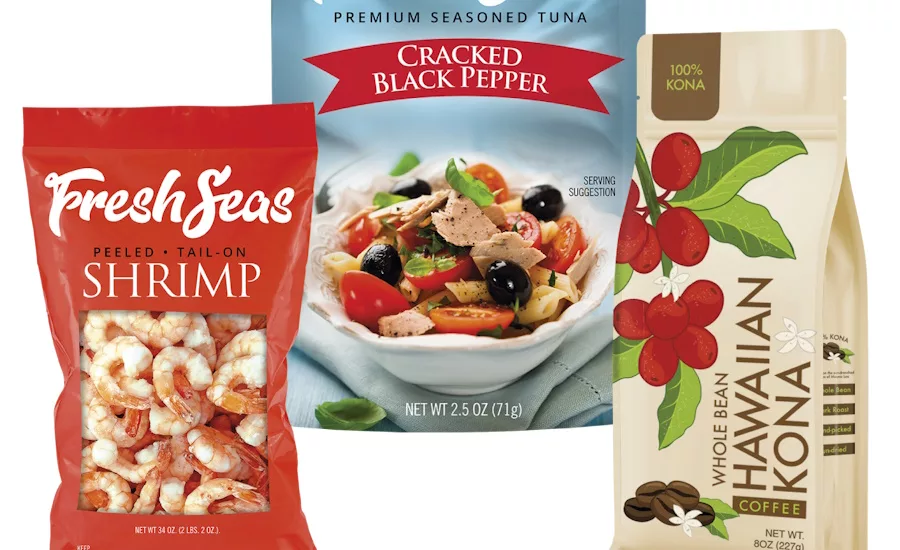
Over the past decade, pouches have transitioned from a niche format to a mainstream packaging choice. Today, they represent one of the fastest-growing applications in printed packaging, outpacing categories such as labels, cartons, and corrugated. From snacks and supplements to pet food, cannabis, household chemicals, and cosmetics, pouches now span nearly every retail aisle. As demand has expanded, so have expectations, particularly when it comes to format variability, sustainability, and how equipment must adapt to evolving run lengths and materials.
One of the most significant shifts in the pouch space is the contraction of run sizes. While high-output performance remains important, brands and flexible packaging converters are increasingly operating in environments where flexibility outweighs raw speed. Batch sizes of 1,000 pouches are now common. As a result, pouch machinery changeover speeds have become a key metric for evaluating systems. Tools and features that allow operators to switch jobs quickly such as semi-tool-less setups, simplified web paths, and modular sealing components, are no longer nice-to-haves; they are essential for maintaining throughput in a short-run world.
Automation continues to be a major area of focus, particularly as converters and packagers struggle with workforce challenges. There is broad interest in automation that can reduce manual labor and improve quality assurance, especially at the downstream end of the line. Technologies such as infrared (IR) seal inspection are gaining traction, enabling real-time evaluation of seal integrity and automatic rejection of nonconforming pouches. These solutions support more consistent output and lay the groundwork for future steps in robotic handling and packing.
However, there are still limitations. While a pouch machine may confirm seal quality, it cannot yet evaluate factors such as print registration or zipper alignment with the same reliability as a trained operator. That creates friction for converters aiming to implement full end-of-line automation, particularly in high-SKU-count environments. The technology is moving in the right direction, but for now, a hybrid approach remains the most effective.
Concurrently, sustainability pressures continue to intensify across every major end-use segment. Recyclable-ready laminated structures have become an industry norm, but interest is rising in paper-based pouch constructions. Paper-based materials are showing particular promise in the coffee market, and inquiries are increasing across other verticals as well. While adoption is still limited by material availability and performance challenges, the industry is steadily moving toward broader use of alternative substrates.
Equipment flexibility is critical in this context. Paper-based structures behave differently during folding and sealing than traditional films. Tolerances, crease control, and sealing dwell times can all shift depending on the material. That means converters need machines that can accommodate a wide range of materials within the same production environment. Even small details, such as the type of Teflon coating used on seal bars, can make a difference when switching between film types.
Zipper technology remains one of the more persistent challenges. Most current zipper options are still plastic-based, and achieving a fully recyclable or biodegradable zipper has proven difficult. Compatibility between zipper material and emerging pouch structures remains a barrier to truly circular packaging solutions. That said, meaningful investment is underway across the zipper manufacturing space, and incremental improvements are being made.
Application-Driven Demands Are Driving Design Decisions
While sustainability and automation dominate the strategic conversation, market dynamics in key segments also continue to influence machine requirements. Cannabis packaging remains one of the most active areas in short-run pouch production, largely due to SKU complexity, frequent design changes, and state-level regulation. The ability to produce high-quality pouches in small quantities, often on digital presses, has made fast changeover and precise handling critical in this space.
Pet food is another area of strong growth, especially as packagers respond to demand for premium flat-bottom pouches and resealable formats. In both treats and dry food segments, companies are balancing the need for high-volume output with increased packaging sophistication. The coffee segment is also pushing boundaries, particularly in the use of high-barrier materials, paper-laminate blends, and evolving pouch shapes that convey artisanal branding.
Private label is an emerging driver as well. Retailers are investing heavily in store-brand pouch packaging that mirrors national brands in both look and performance. For converters and packagers, this means handling multiple SKUs, varied pouch types, and growing expectations for shelf impact, often within the same production run. Equipment that supports fast adjustments and consistent pouch quality is increasingly valuable in this environment.
Running newer substrates introduces its own set of technical hurdles. The use of post-consumer recycled content (PCR), downgauged films, and hybrid structures all affect sealing characteristics, web tension, and material handling. To stay competitive, pouch machinery must not only accommodate this variability but do so without compromising productivity or seal integrity. That requires continual adaptation on the part of OEMs, whether in how seal bars are configured, how folding boards are designed, or how software responds to sensor input.
As materials evolve, so must the technology behind the machines. The ability to support quick changes in structure, format, and output levels is becoming a defining characteristic of next-generation pouch equipment. For manufacturers, that means rethinking design assumptions and investing in modular systems that can evolve alongside the marketplace.
Looking ahead, the pursuit of fully recyclable or biodegradable pouch constructions will continue to shape both material science and machinery development. In the meantime, converters and packagers need practical tools that help them stay agile, maintain quality, and keep pace with change. That is where the next wave of innovation in pouch machinery will have its greatest impact, not just in high-profile features, but in solving the real, day-to-day challenges of production.