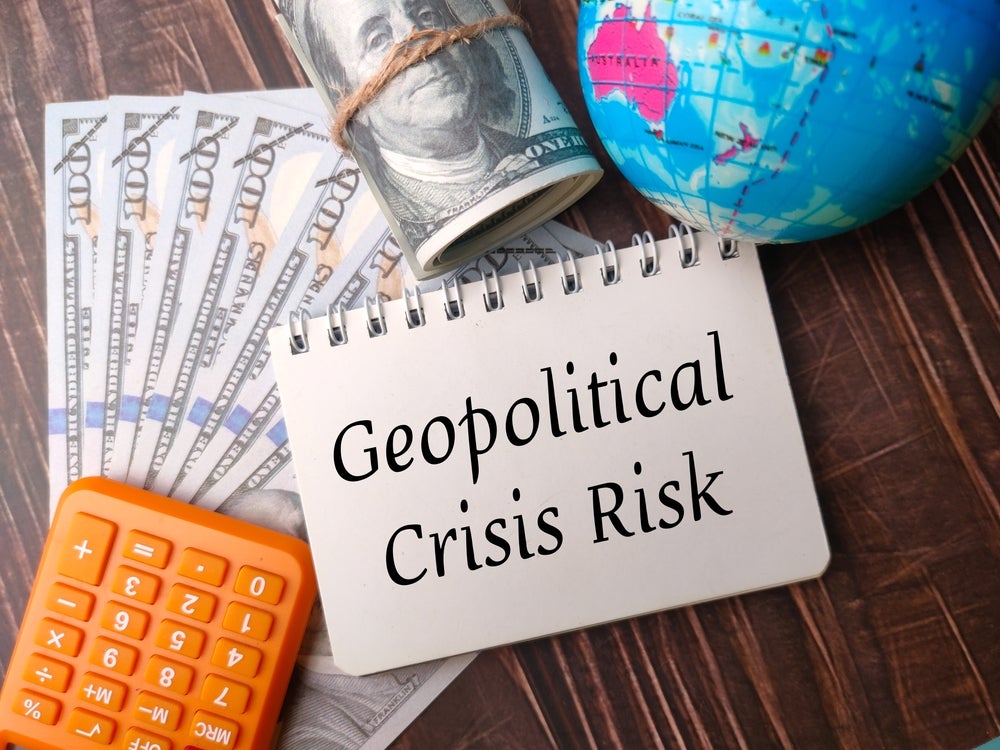
The case for packaging investment is being reshaped by geopolitical risk. For investors, lenders and corporate buyers, packaging is no longer judged only on demand growth and plant efficiency. It is also judged on exposure to freight disruption, energy price swings, raw material concentration and regulatory change.
That matters because packaging remains a large and growing global market. Smithers forecasts that the sector will grow from $1.17 trillion in 2023 to $1.42 trillion in 2028, with flexible plastics posting the fastest growth among major material types.

Discover B2B Marketing That Performs
Combine business intelligence and editorial excellence to reach engaged professionals across 36 leading media platforms.
Growth is still there, but risk now plays a bigger role in how packaging assets are valued.
Cost volatility is changing investment priorities
Geopolitical tension affects packaging through costs first. UNCTAD says freight rate volatility has become “the new normal”, with rates in 2024 and 2025 remaining elevated and unstable because of geopolitical tensions, policy shifts and supply-demand imbalances.
For packaging companies, that can feed straight into the cost of moving paper, polymers, aluminium, glass and finished packs across borders. It also raises the importance of plant location, contract structure and procurement discipline.
This changes what investors look for. In a calmer market, scale and volume growth may dominate the story. In a more unstable one, stronger weight is placed on margin protection, pricing power, regional production footprints and dependable customer contracts.
The World Bank’s latest commodity outlook points to lower overall commodity prices in 2025 and 2026, yet it also notes persistent policy uncertainty and exceptions in areas such as aluminium, copper and fertilisers.
That is a useful reminder that lower benchmark prices do not remove day-to-day risk for packaging operators. Real-world input costs can still stay uneven by region and material.
For the packaging industry outlook, this means quality of earnings matters more than headline growth. Businesses that can manage working capital tightly, diversify sourcing and recover costs through contracts are likely to look stronger than businesses that rely on spot purchasing or long, fragile supply routes.
That is now central to the packaging investment case.
Regulation and resilience are now linked
Geopolitical risk is not acting alone. It is colliding with tighter packaging rules, especially in Europe. The European Commission says the Packaging and Packaging Waste Regulation entered into force on 11 February 2025 and will generally apply from 12 August 2026.
Its purpose is to reduce packaging waste and support a more circular and resilient economy. In practice, that pushes packaging businesses to think about recyclability, material efficiency and reuse alongside cost and supply security.
This is one reason sustainable packaging has moved from brand language into capital planning. The OECD says extended producer responsibility makes producers responsible for products at the post-consumer stage and helps fund collection, sorting and recycling.
That shifts waste from being mainly a public cost to being more directly tied to business decisions. For investors, it means packaging groups with credible compliance plans and better circular design may be better prepared for future cost and policy pressure.
The commercial case is becoming clearer too. McKinsey’s 2025 packaging research found that sustainability still matters to consumers, even though priorities vary by market and affordability remains important.
That does not mean every low-impact packaging claim creates value. It does mean that recyclability, material simplicity and practical circularity are now part of mainstream risk management. In other words, circular packaging is no longer separate from business resilience.
Better packaging assets are built for uncertainty
The strongest packaging assets in a riskier world are usually not those chasing expansion at any cost. They are the ones built to absorb shocks.
The World Economic Forum’s work on circular supply chains argues that stronger recovery loops and better use of secondary materials can improve resilience as well as sustainability.
The same body has also warned that materials supply chains are under increasing strain from geopolitics, demand growth and climate pressures. That supports a broader investment lesson: packaging businesses that rely less on single routes, single regions and single virgin inputs may have a more durable proposition.
For many investors, that points to three practical tests:
First, does the business have a portfolio aligned to resilient end markets such as food, healthcare and essential consumer goods? Second, is it investing in productivity, packaging design and regional supply chain resilience rather than volume alone? Third, can it navigate packaging regulation and customer demand without eroding margins?
These questions are now harder to avoid because geopolitical shocks have made operational weakness more visible.
The long-term packaging market outlook remains positive, but the terms have changed. Packaging still benefits from durable demand and broad end-market exposure. Yet in a more fragmented and volatile trading environment, investors are placing higher value on resilience, compliance readiness and disciplined capital allocation.
Geopolitical risk has not weakened the case for packaging investment. It has made that case more selective, and more demanding.